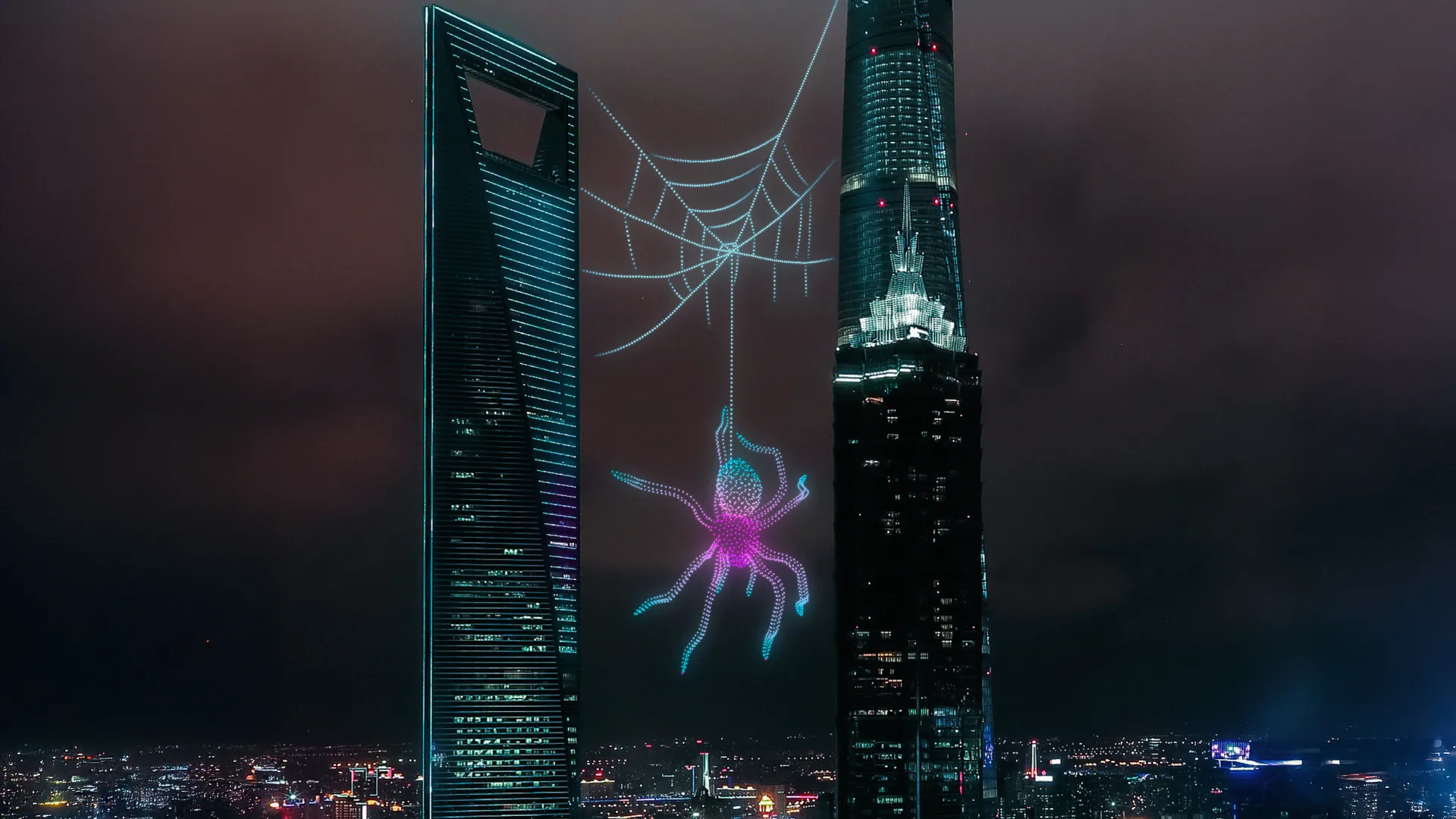
Drone & Laser Show: An extra dimension of light
A drone show alone already feels innovative — but pairing it with lasers signals that you are ahead of the curve, experimenting with what’s next, not what’s standard.
last update:
A drone show alone already feels innovative — but pairing it with lasers signals that you are ahead of the curve, experimenting with what’s next, not what’s standard.


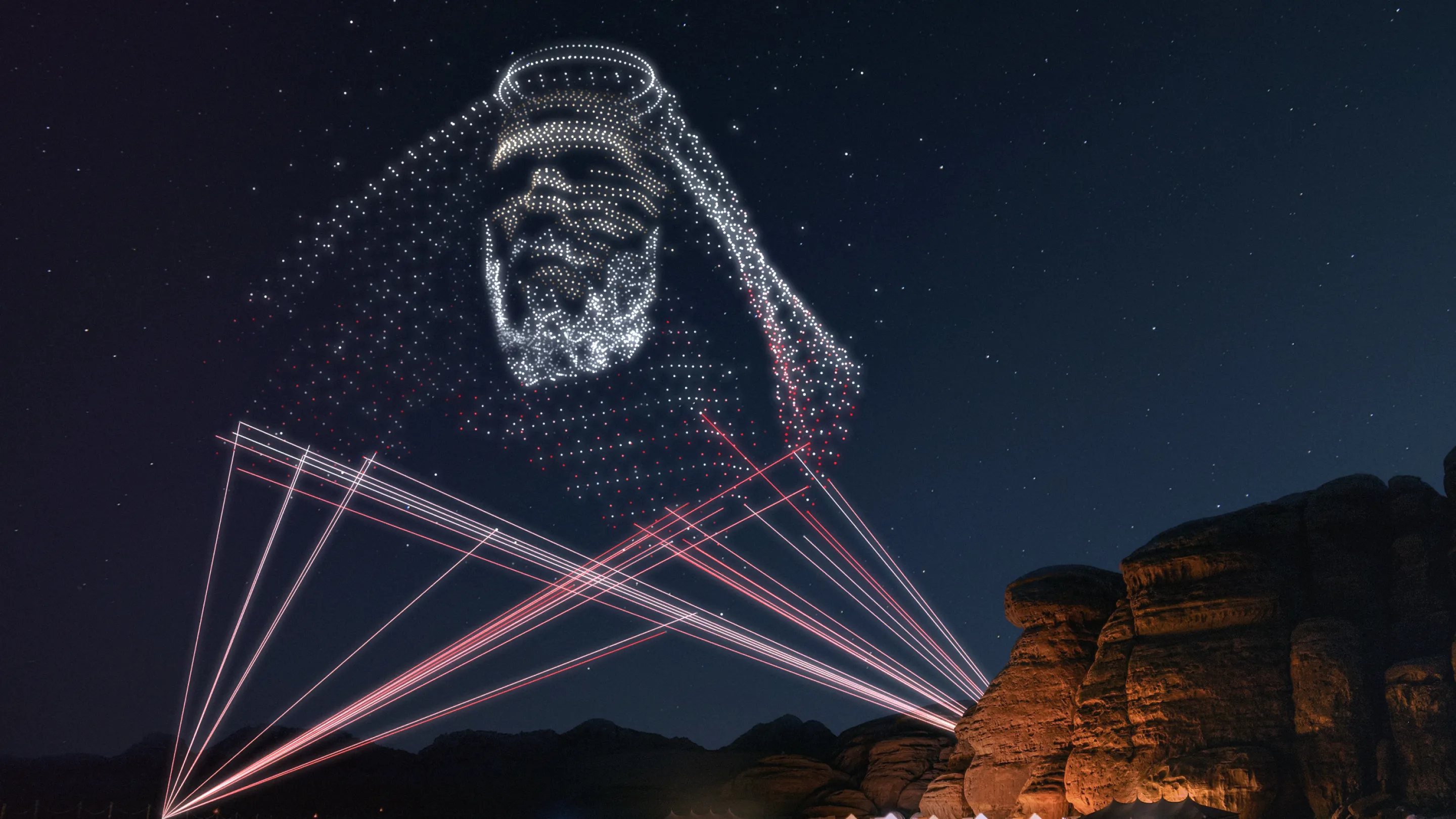
When you think of a drone show, you imagine hundreds or even thousands of flying lights, forming shapes and stories in the sky. When you picture a laser show, you see sharp beams slicing through the night, dancing in rhythm with music, creating tunnels, waves, and bursts of energy. Each artform has its own magic.
But what happens when these two worlds meet?
That’s where something truly new begins. Drones bring structure, depth, and movement across the sky. They are like architects, building forms that no screen or stage could ever contain. Lasers add intensity, speed, and vibrancy, being like brushstrokes of pure energy, cutting across space and amplifying everything around them. Together, they double the spectacle and introduce a new language of light, where beams and formations interact as if they were alive.
For audiences, it feels like a living painting. For event hosts and brands, it means an unforgettable experience, one that draws attention on the ground and multiplies it online.
Instead of treating drones and lasers as separate acts, we started imagining how they could truly collaborate: side by side, but in dialogue. The result is a set of ideas that explore different moods, emotions, and storytelling styles. Each shows a unique way these two mediums can come together to transform the sky into something unforgettable.
Look up, and a tunnel of light opens above you: lasers weaving between drone formations, stitching the night into a living structure. Beams of lasers cut through the night like glowing threads, weaving between formations of drones that hold their shape in the sky. It feels almost architectural, as if the air itself has become a structure you can walk through with your eyes.
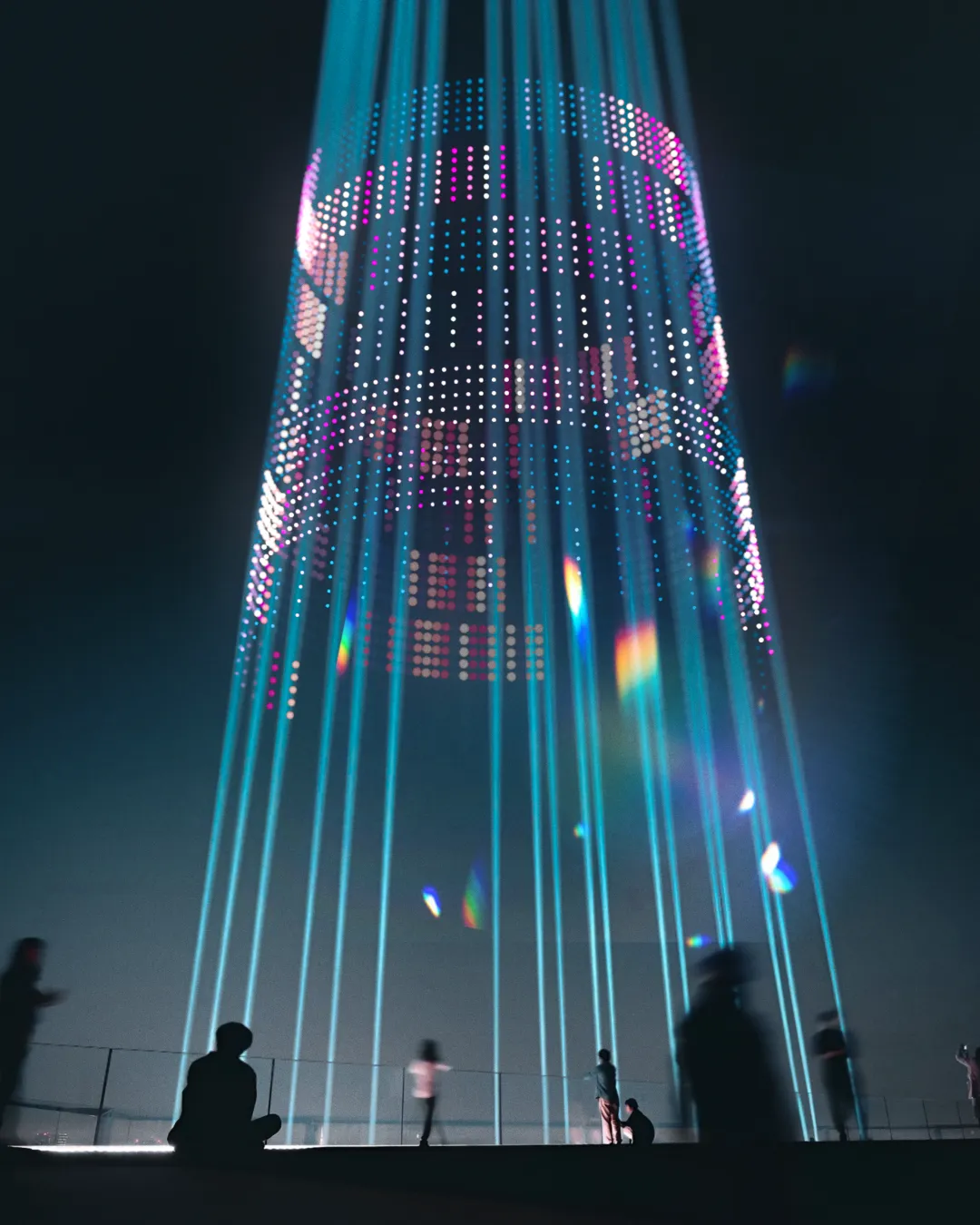
This idea, “weaving light,” turns the sky into a three-dimensional canvas. Drones create the framework: walls, arches, or floating sculptures. Lasers then pass through and around these formations, filling the negative space with energy. The result is not just a picture in the sky, but an experience of depth and volume.
Where it works bests
What it makes people feel
There’s a strong sense of immersion, almost like being pulled into the light. People don’t just watch from the outside, they feel surrounded, part of the spectacle. The weaving beams suggest motion, energy, and momentum.
Why it’s valuable for hosts and brands
In short, “weaving light” is about more than brightness. It’s about layering light and form so that the sky feels bigger than it is, and the audience feels they’ve stepped inside something impossible.
Every great show needs balance: a strong foundation and a spark of brilliance. That’s exactly what happens when drones and lasers take on different roles in the same performance. In this concept, drones are the architects that build structures, outlines, and recognizable figures, while lasers are the stars that add sparkle, rhythm, and pure energy.
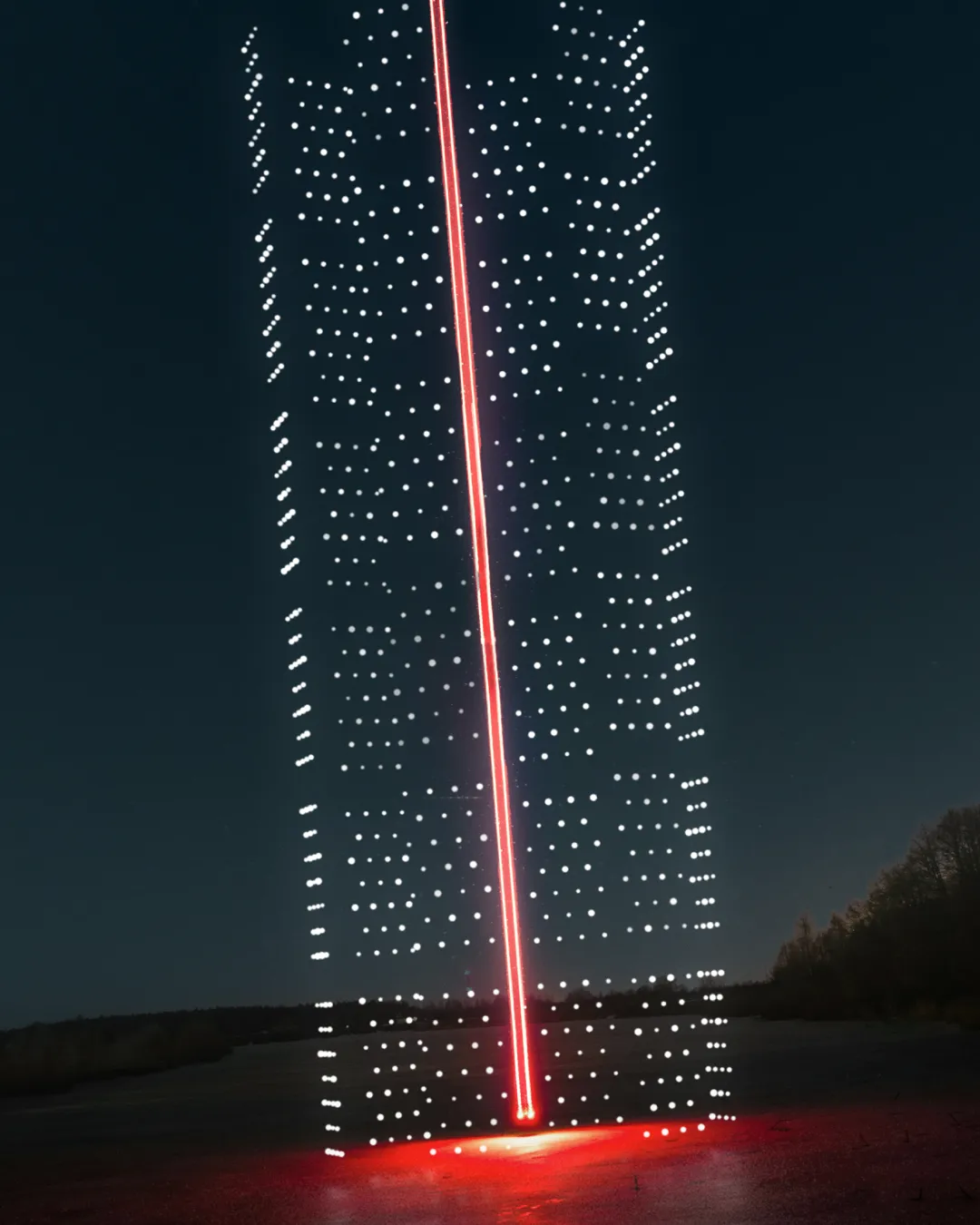
Drones provide the clarity the audience needs: a logo in the sky, a portrait, a symbol of a city or brand. Their steady formations give the eye something to hold onto, something that feels solid and memorable. Lasers, in contrast, inject motion and excitement. They streak, flare, and dance around the drone architecture, amplifying the form and making it shine brighter than it could on its own.
Where it works best
What it makes people feel
Audiences experience awe mixed with clarity. The drones give them a shape they immediately recognize, while the lasers trigger emotion: the excitement, the thrill, the sense of spectacle. Together, it feels both monumental and alive.
Why it’s valuable for hosts and brands
In short, “Stars & Architects” is about giving every performance two voices: one that grounds the audience in meaning, and one that lifts them into emotion. It’s not just a picture in the sky — it’s a picture that sparkles, radiates, and lives.
You see a laser sweep across the sky: sharp, deliberate, like a conductor’s baton. A second later, the drones respond: shifting color, changing shape, or rushing into the illuminated space. The beams set the cue, the swarm delivers the answer.
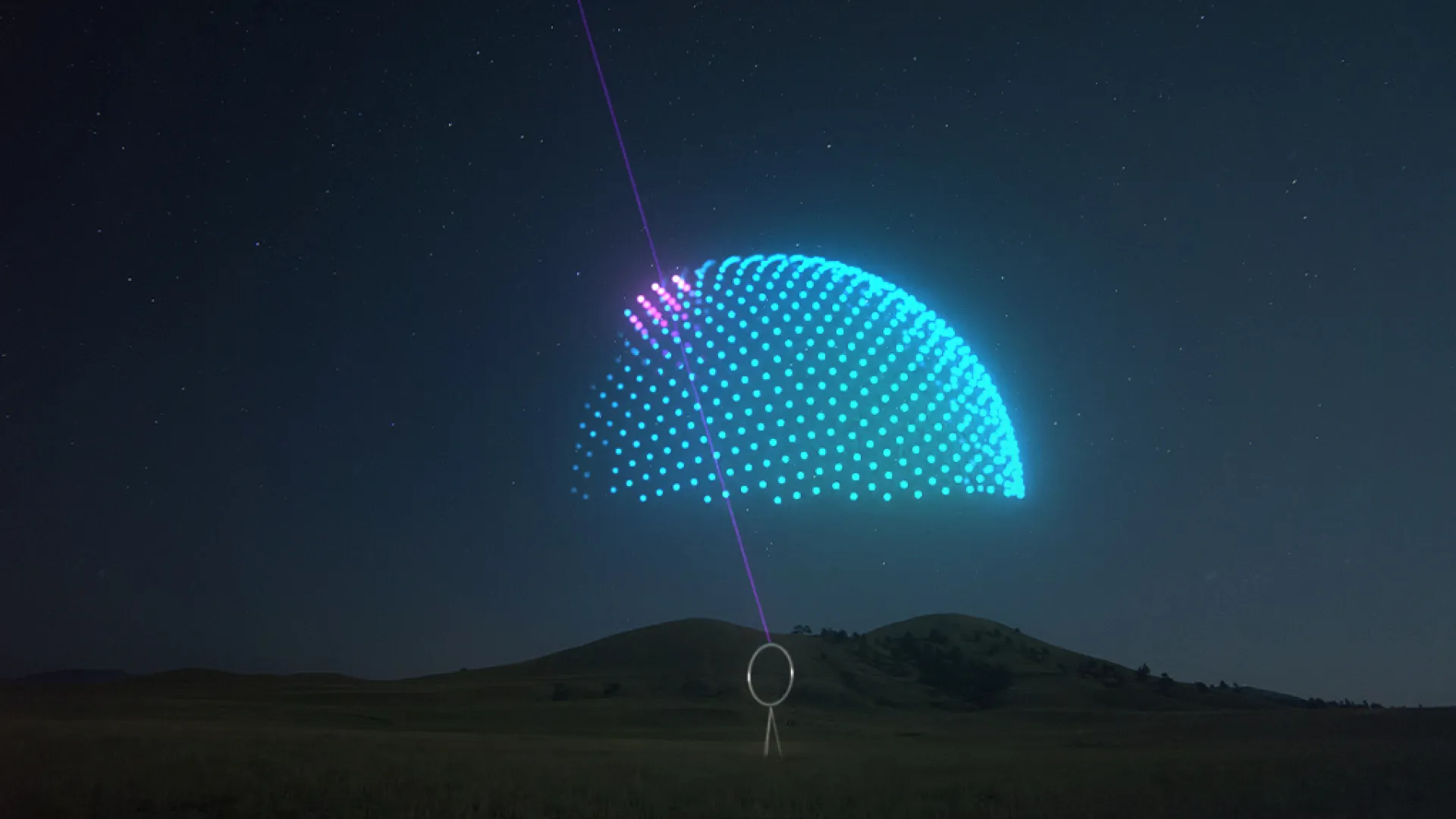
This is “Stage & reaction.” Instead of running in parallel, lasers and drones behave like performers in dialogue. The laser marks a beat, the drones reply with movement. The laser flashes, the drones ripple in response. To the audience, it feels less like a pre-programmed sequence and more like a living conversation between light and form.
Where it works best
What it makes people feel
There’s an electric sense of immediacy. The audience experiences the thrill of call-and-response, almost as if the show were improvising in real time. It feels dynamic, playful, and alive — a performance that reacts rather than just plays out.
Why it matters for hosts and brands
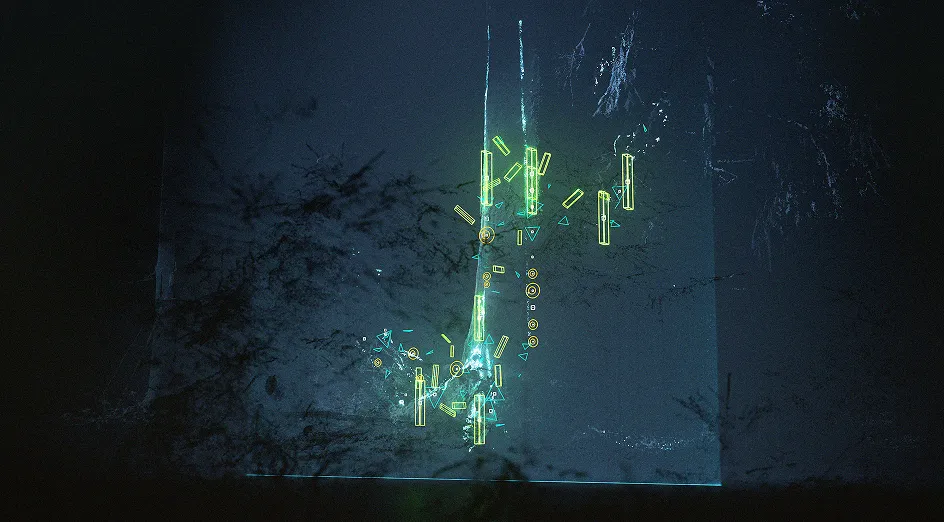
The sky splits into two acts. Above, drones build figures and stories. Across the horizon, lasers move independently: kinetic, abstract, almost like a second performance. For a while, they live separate lives. And then, in a carefully timed moment, the two worlds merge into one overwhelming finale.
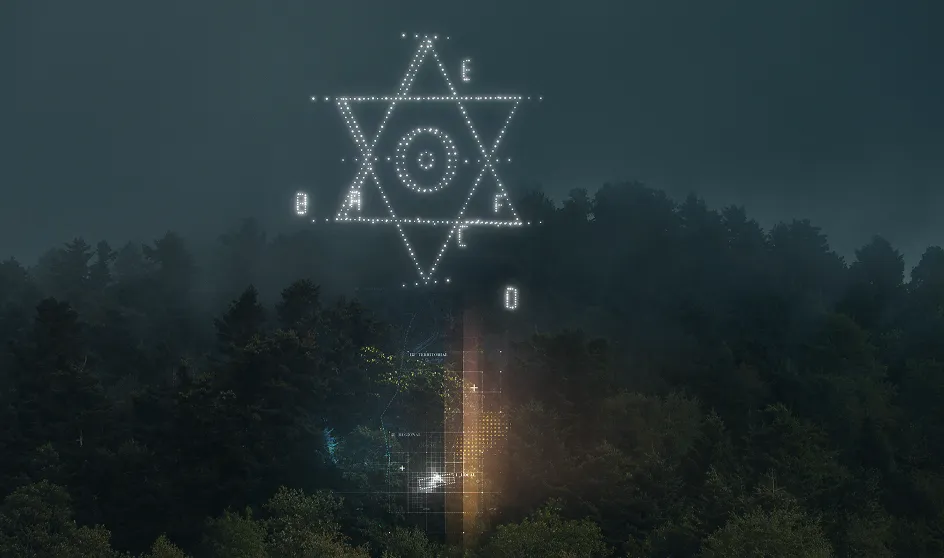
This is “Dual installation.” Instead of one blended show, the audience witnesses contrast: drones as narrative, lasers as pure motion. Their independence makes the final union more powerful, like two voices joining in harmony.
Where it works best
What it makes people feel
Audiences feel the thrill of anticipation: two strong elements developing in parallel, the tension rising. When drones and lasers finally merge, the release is cathartic, emotional, unforgettable.
Why it matters for hosts and brands
A drone figure stretches beyond itself, as if it were alive, flowing outward through beams of laser light. A statue seems to trail glowing ribbons, a wave turns into rippling currents of light, a symbol hangs in the air with shimmering threads cascading down.
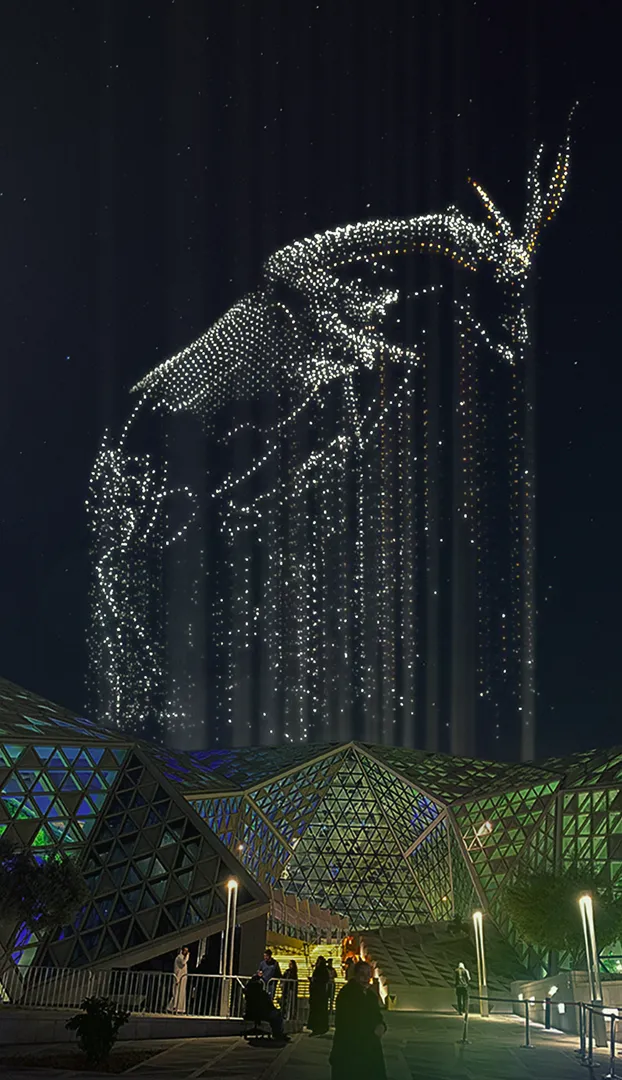

This is “extensions of form.” Drones create a clear, recognizable figure, while lasers act as its continuation: silk-like drapes, flowing water, glowing fabric suspended in space. The effect is surreal: the formation breathes, expands, and transforms from a static outline into a living presence.
Where it works best
What it makes people feel
Elegance, fluidity, and a touch of magic. Audiences sense that the image is not fixed but alive, stretching into the night with grace. It’s dreamlike, poetic — perfect for moments that need sophistication rather than raw power.
Why it matters for hosts and brands
All in all, extensions of form turn drone formations into something greater than themselves: shapes that unfold, spill, and flow into the imagination of the audience.
A single laser sweeps across the night like the stroke of a brush. As the glowing line hangs in the air, drones rush in to fill it with color, depth, and texture. Stroke by stroke, shape by shape, the performance turns into a living canvas above the audience.
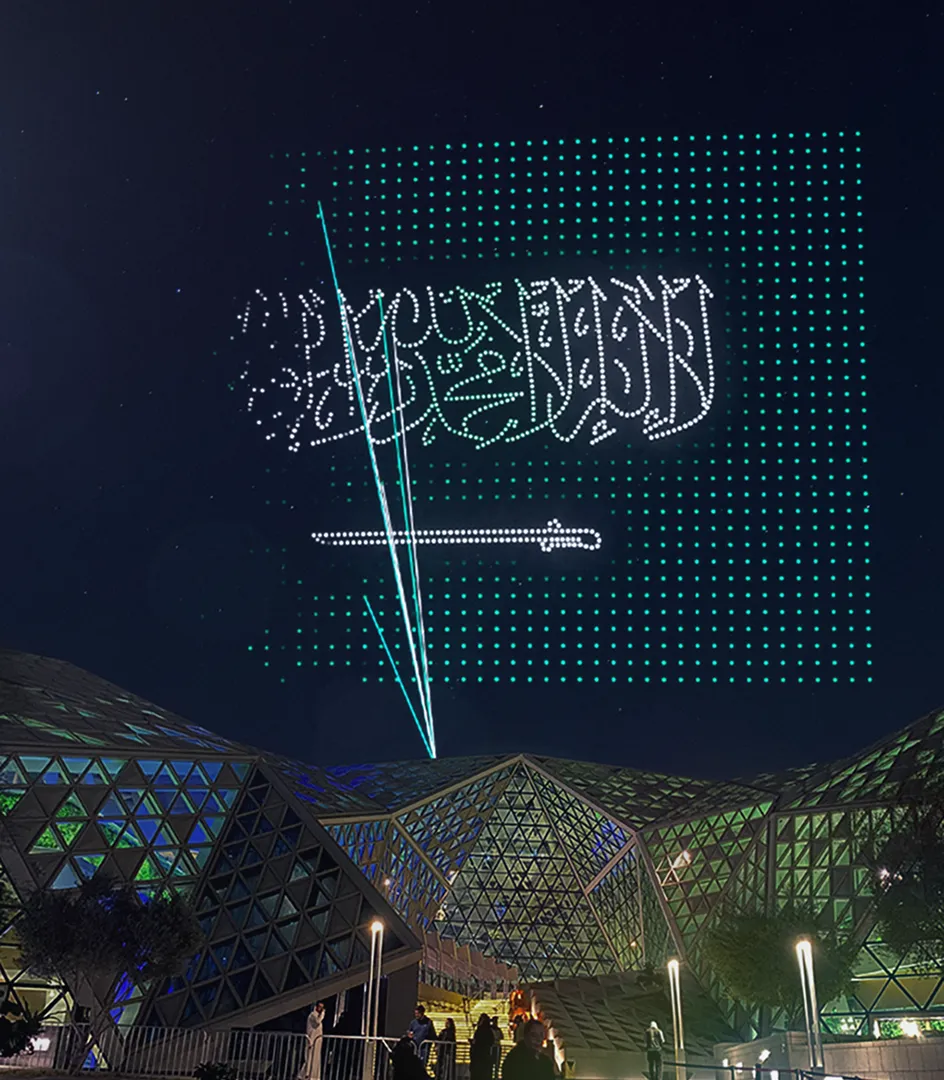
This is “the painter’s brush.” Lasers sketch—swift, deliberate, elegant. Drones follow, completing the image, adding dimension and storytelling. The sky becomes an artwork in progress, unfolding in real time.
Where it works best
What it makes people feel
Audiences experience the satisfaction of creation, watching something form step by step, from a gesture of light into a complete picture. It feels personal, poetic, and almost intimate, even at a large-scale event.
Why it matters for hosts and brands
So the painter’s brush transforms the night into a gallery, where every laser stroke is answered by a burst of drone light. It’s art in motion, created live above the audience.
After exploring six ways drones and lasers can interact, one thought becomes clear: the real strength of modern sky shows lies in collaboration. No single element has to carry everything on its own. Drones give us clarity and form. Lasers bring movement and energy. Fireworks spark raw emotion. Projection mapping grounds the story in architecture. Live performers add a human heartbeat. Each is powerful on its own, but together, they create something audiences have never seen before.
Right now, lasers feel like the most natural partner for drones. Sharp, modern, endlessly flexible, they weave into formations as if they were made for each other. The result feels fresh, surprising, and full of creative potential. It’s a pairing worth experimenting with, pushing, and refining, because every time they share the sky, they unlock new moods and possibilities.
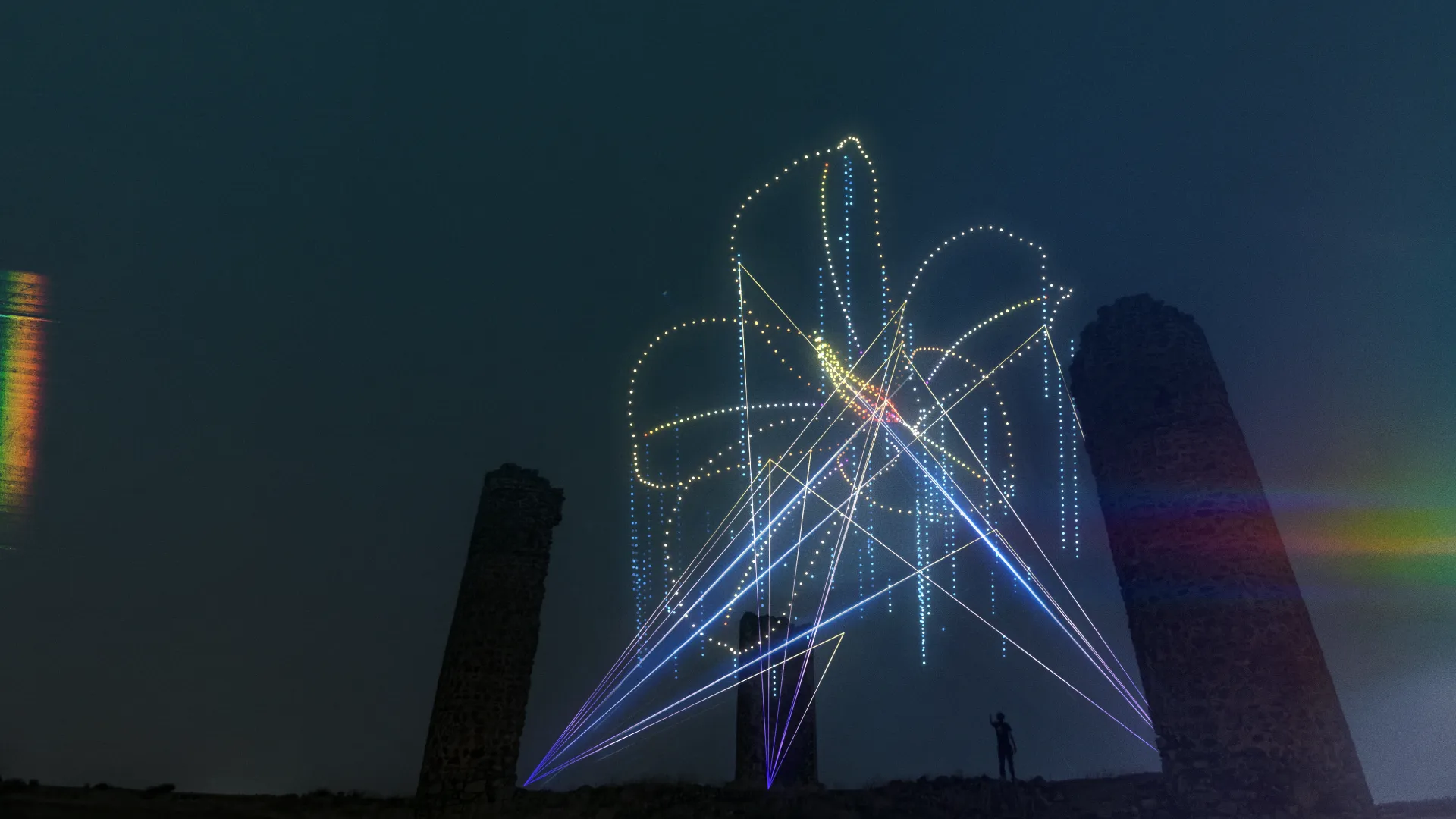
And of course, there are many other ways to extend this dialogue:
The future is wide open. What if drones created a glowing globe above a city square, and lasers spun around it like orbiting satellites? What if a wedding ended with drones forming a constellation while lasers connected the stars into a story written just for the couple? What if a product launch unveiled not only a shape in the sky, but a whole “digital universe,” with drones as planets and lasers as cosmic trails tying them together?
These are just sketches — possibilities waiting to be explored. That’s the true power of collaboration: every time two tools meet, a new chapter of aerial art begins.
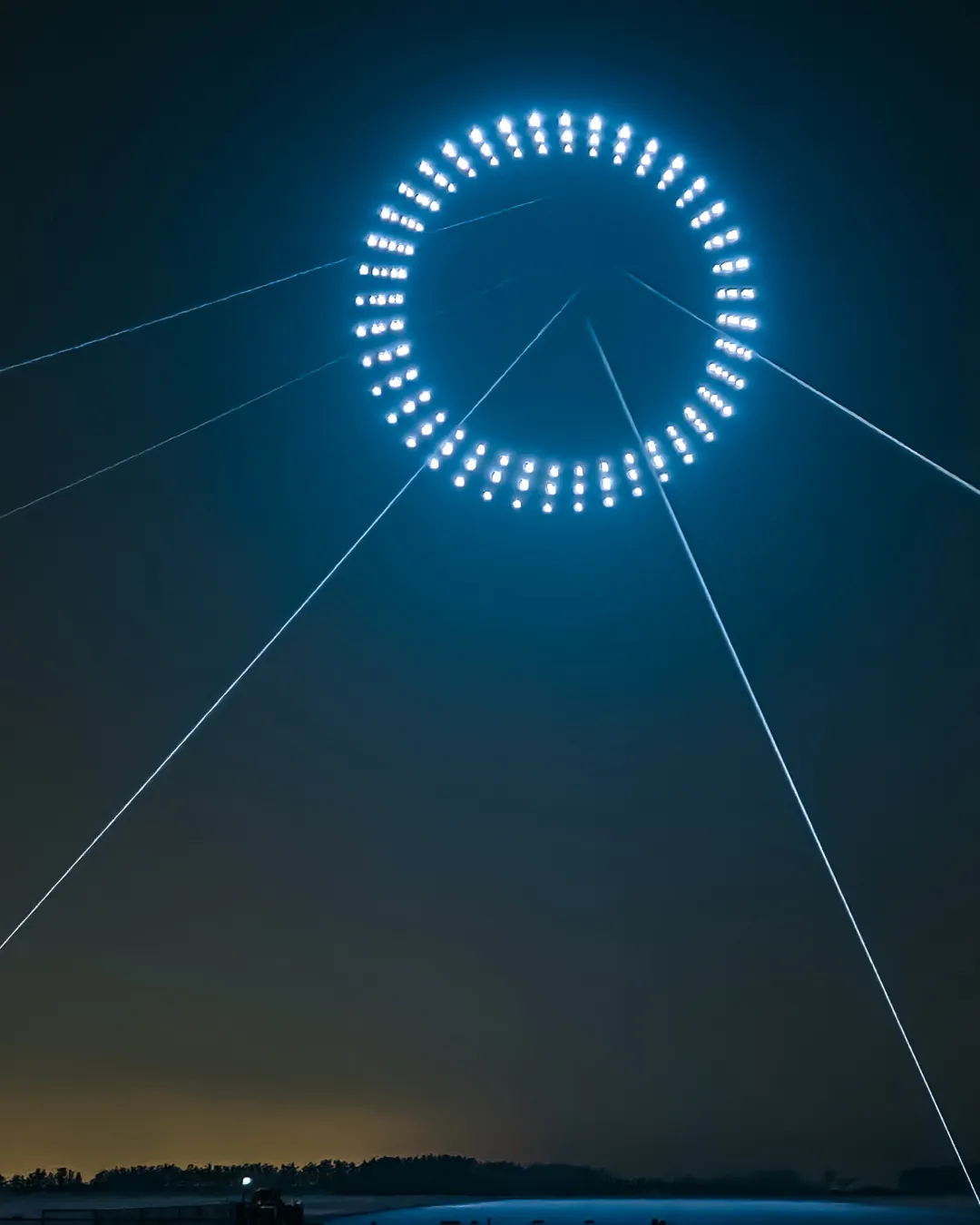
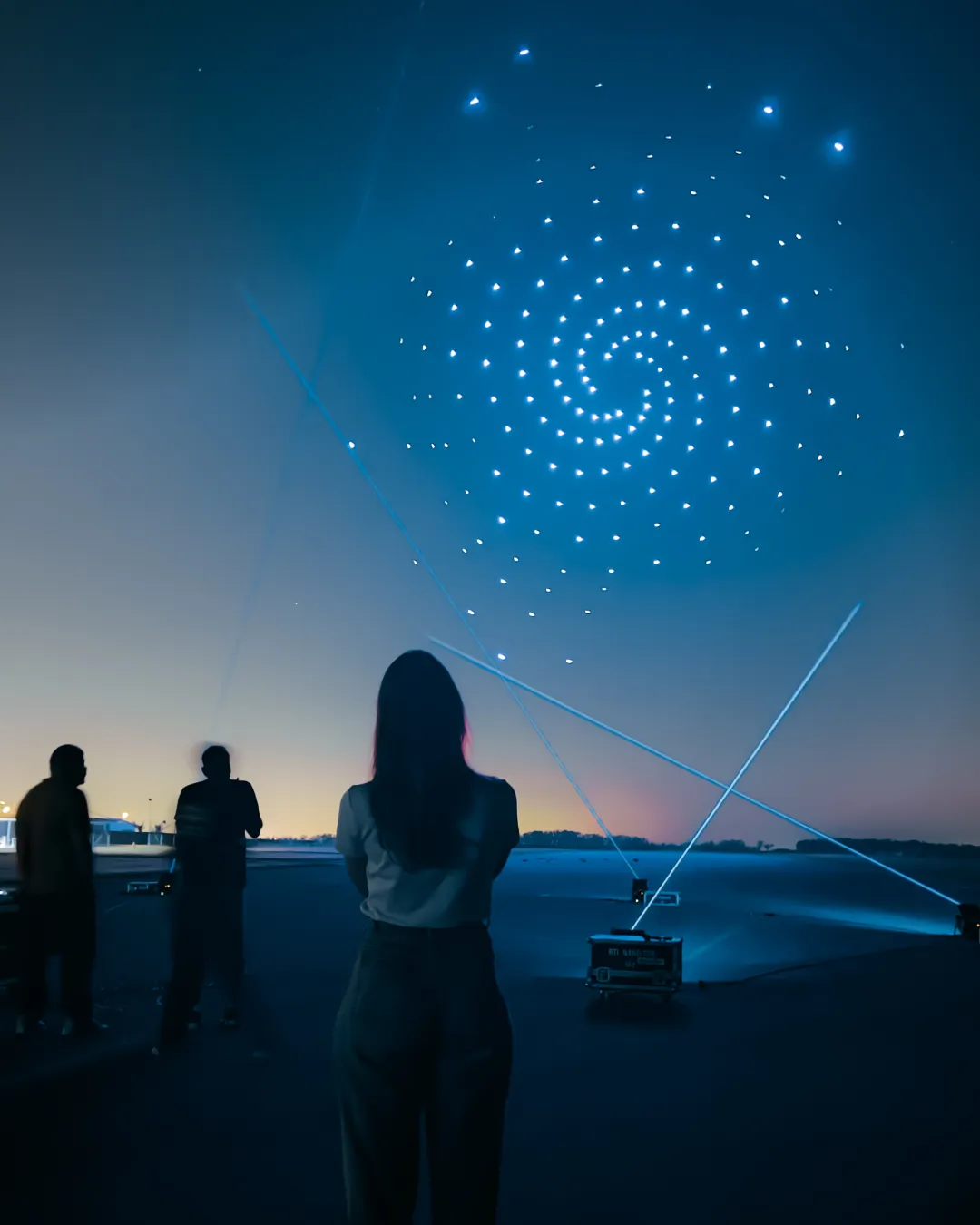
All of this is not just theory for us. We are already testing these ideas in real shows, combining drones and lasers at different scales and in different formats. In practice, the result is exactly what it promises to be: bright, sculptural, and incredibly photogenic. Beams wrap around formations, figures gain extra depth, and the whole scene feels more like a living installation than a single effect.
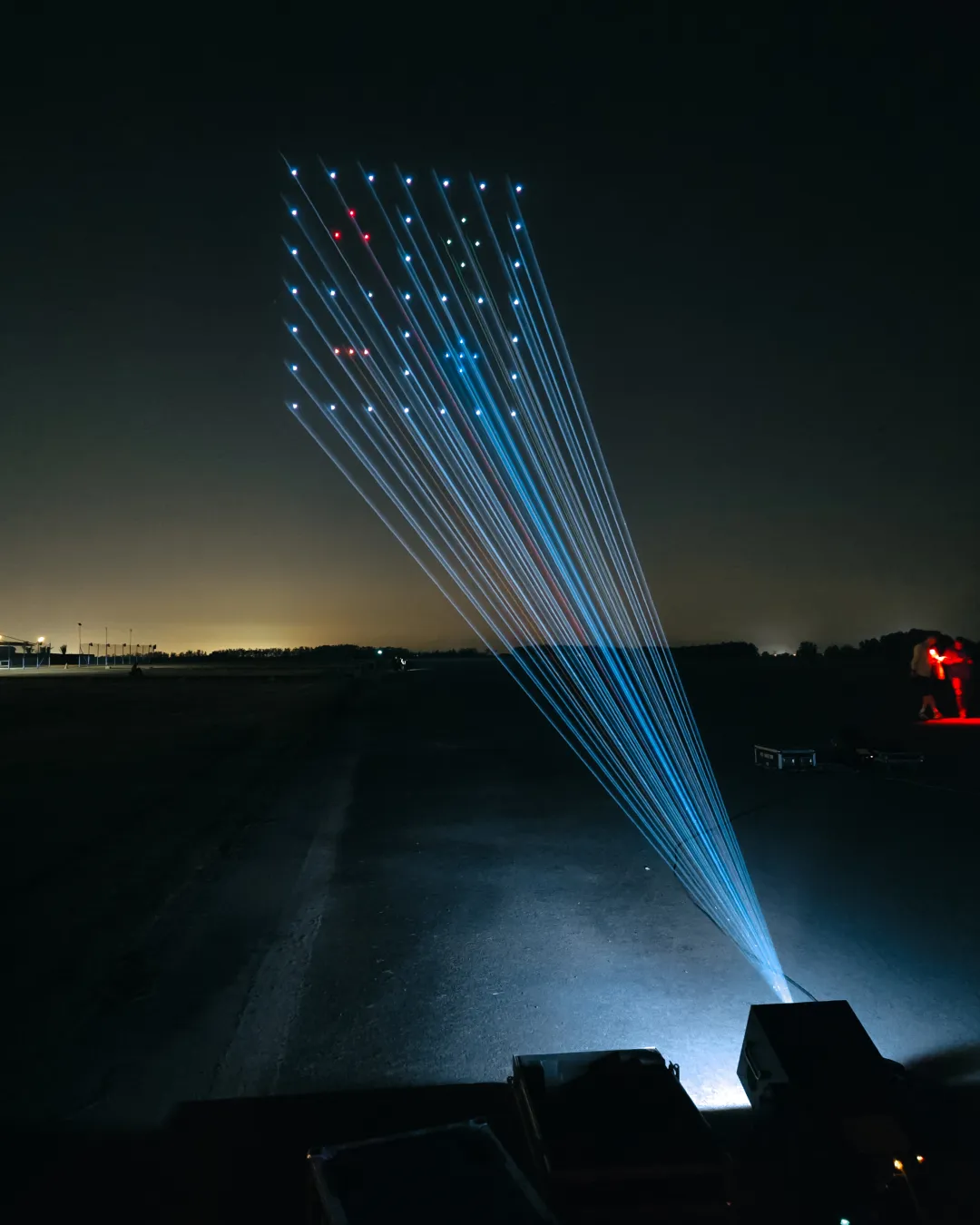
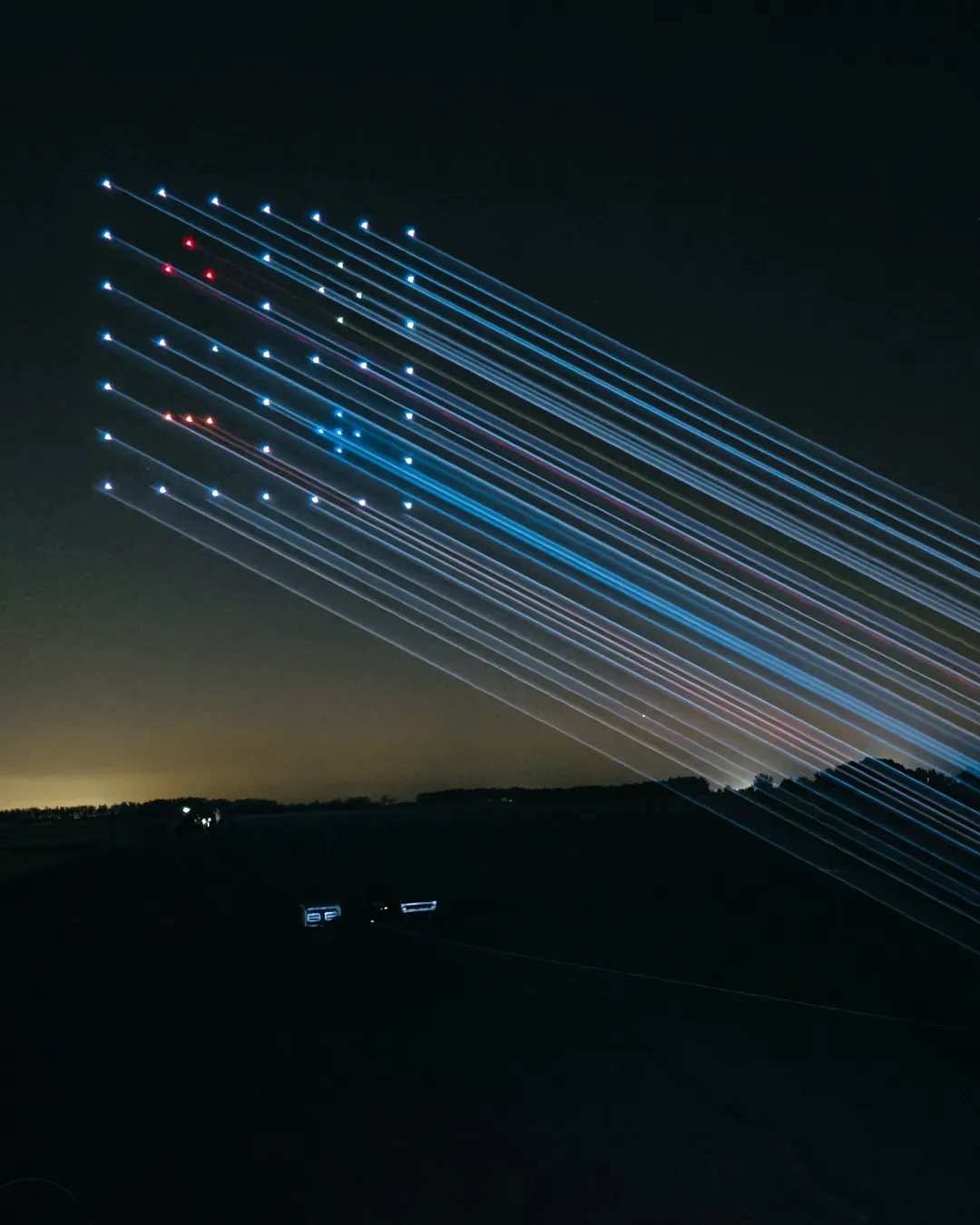
What you see confirms what we sensed from the beginning: hybrid shows have a big future. As lasers and drones learn to “speak” to each other more precisely—through shared timelines, tighter cueing, and smarter design—the language of the sky will only grow richer. Each new show becomes both a finished artwork and a prototype for what the next generation of aerial experiences can be.
Exploring drones and lasers together shows something larger than a single trend. It reflects how live experiences are evolving: audiences no longer want a single effect, they want layers of emotion, depth, and surprise. Combining creative tools is not just about scale, it’s about storytelling that feels multidimensional.
For organizers and brands, this means the bar is rising. A drone show alone already feels innovative — but pairing it with lasers signals that you are ahead of the curve, experimenting with what’s next, not what’s standard. It demonstrates confidence, creativity, and a willingness to deliver experiences that people haven’t yet grown used to.
For the industry, collaborations like this set the tone for the future. They show that aerial art can be adaptive, flexible, and ever-renewing. Each new pairing — drones with lasers, with fireworks, with architecture — opens another chapter of what’s possible.
And for clients, the takeaway is simple: the sky is no longer just a canvas, it’s a playground for ideas. Those who choose to explore it now will be remembered as pioneers of a new era of celebration.