Drone advertising: Using drone light shows as media
Drone advertising: Using drone light shows as media
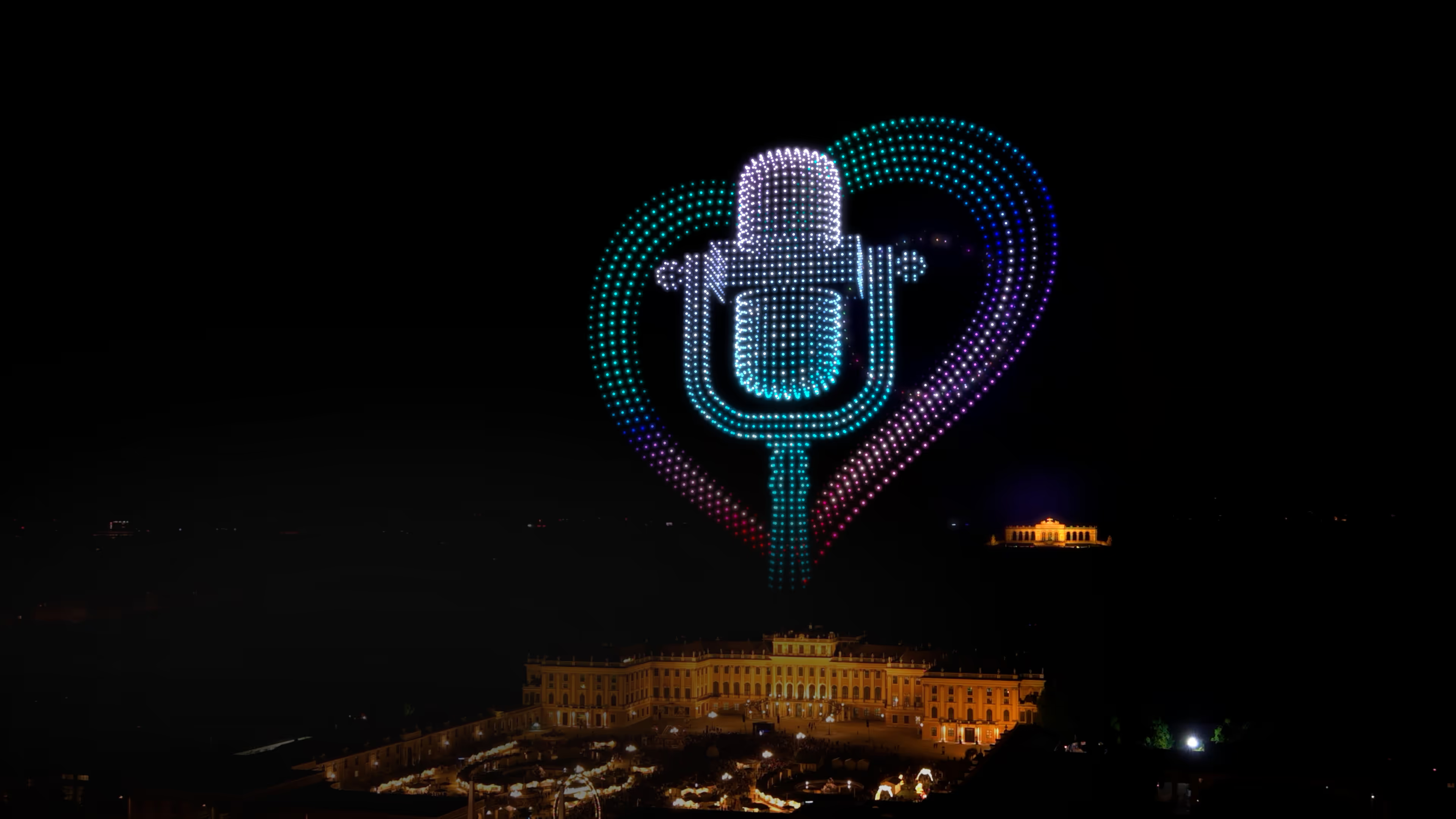
Marketers are starting to treat the sky as a screen. Brands like Coca-Cola, Netflix, and LEGO have already turned drone light shows into launch moments, seasonal spectacles, and city-scale teasers people instinctively record and share. The question now is simple: who should use drone advertising—and when does it outperform a billboard, a fireworks finale, or yet another digital buy?
A few years ago, drone shows were filed under “spectacle.” Today they behave like media. They gather thousands of eyes in one place at one moment, then route that attention into measurable actions online. The value isn’t only in the gasp; it’s in the bridge that follows—people lift their phones, scan a code, tap a link, and your launch night turns into a trackable surge of traffic and leads. This shift happened because three things matured at once.
First, audiences are saturated with flat screens and templated ads, so a scene in the sky feels rare. It happens once, in this exact location, under these exact conditions—scarcity that reads as news.
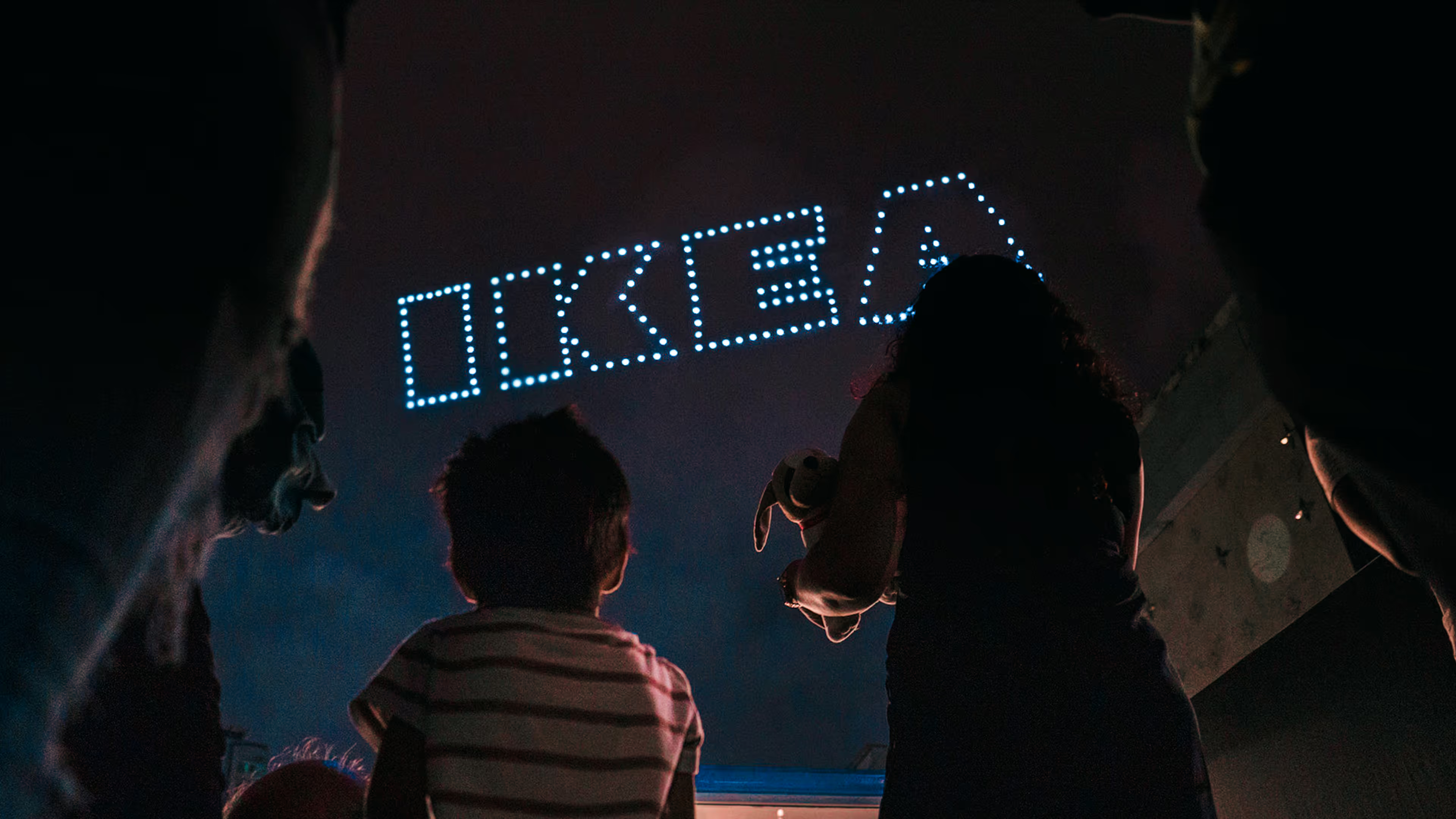
Second, the creative language caught up. Modern fleets can draw clean silhouettes, words, and 2D/3D figures that read from hundreds of meters away, and the choreography is written in tight, loopable beats—ten, twenty, thirty seconds—that drop straight into Reels and Shorts without losing clarity. These beats can carry behavior, not just imagery: a countdown that builds tension before a reveal; a contour that “assembles” a product and resolves into a line of copy; an arrow that literally points to your pop-up, showroom, or sales suite; a QR moment that hands people the next action.
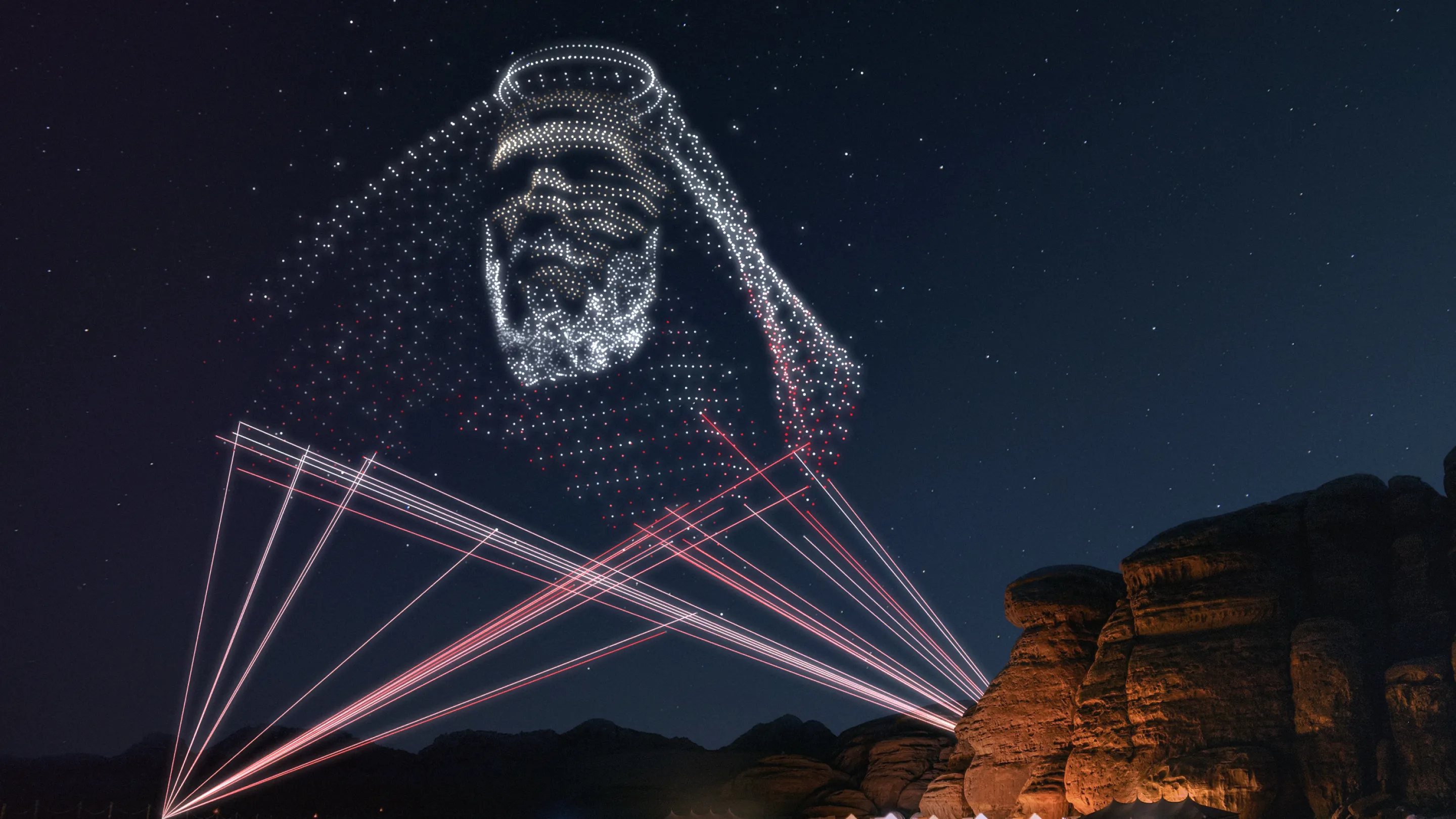
Third, the production playbook is now dependable. Site-adapted visualizers let you preview the show from real vantage points—promenade, VIP terrace, stadium bowl—so scale, altitude, and stroke weight are tuned before a single battery is armed. Everything runs on one timecode, which means music or voiceover, architectural lighting, laser outlines, projection on a façade, and even measured pyro accents can move like one idea instead of a pile of effects.
That’s why brands reach for drones in moments that are supposed to feel bigger than a media buy: the first reveal of a car, the opening of a flagship store or mall district, the unveiling of a real-estate project on the actual site, the start of a tourism season on a waterfront everyone recognizes, the opening or closing sequence of a conference that wants to live beyond the ballroom. When the location itself is an asset, the sky turns into a second stage—and the city becomes part of the message.
It works best when your story fits a compact arc—sixty to one-hundred-eighty seconds with a clear beginning, reveal, and call to action—and when you care as much about the digital aftermath as the live crowd. You’re not just “doing a show”; you’re manufacturing a moment that people will film from ten different angles, then making sure those views connect to something: a micro-landing with UTMs, a preorder flow, a coupon drop, an AR filter, a test-drive booking. The live experience earns attention; the plumbing converts it.
Of course, it still asks for craft and patience. Permits must be lined up; heritage zones and sensitive habitats demand respect; weather wants a Plan B. Drones prefer dusk and night; if you only have a midday slot, you’ll need a different concept or a hybrid approach. But with the right runway, drone advertising stops being a novelty and becomes a reliable anchor for the whole campaign—the moment that people remember, the clip your editors build around, and the link your analytics can actually trace.
Before we talk tactics, it helps to see what “good” already looks like. Over the last few years, a handful of campaigns showed how the sky can behave like real media—earning attention in the moment and converting it right after.
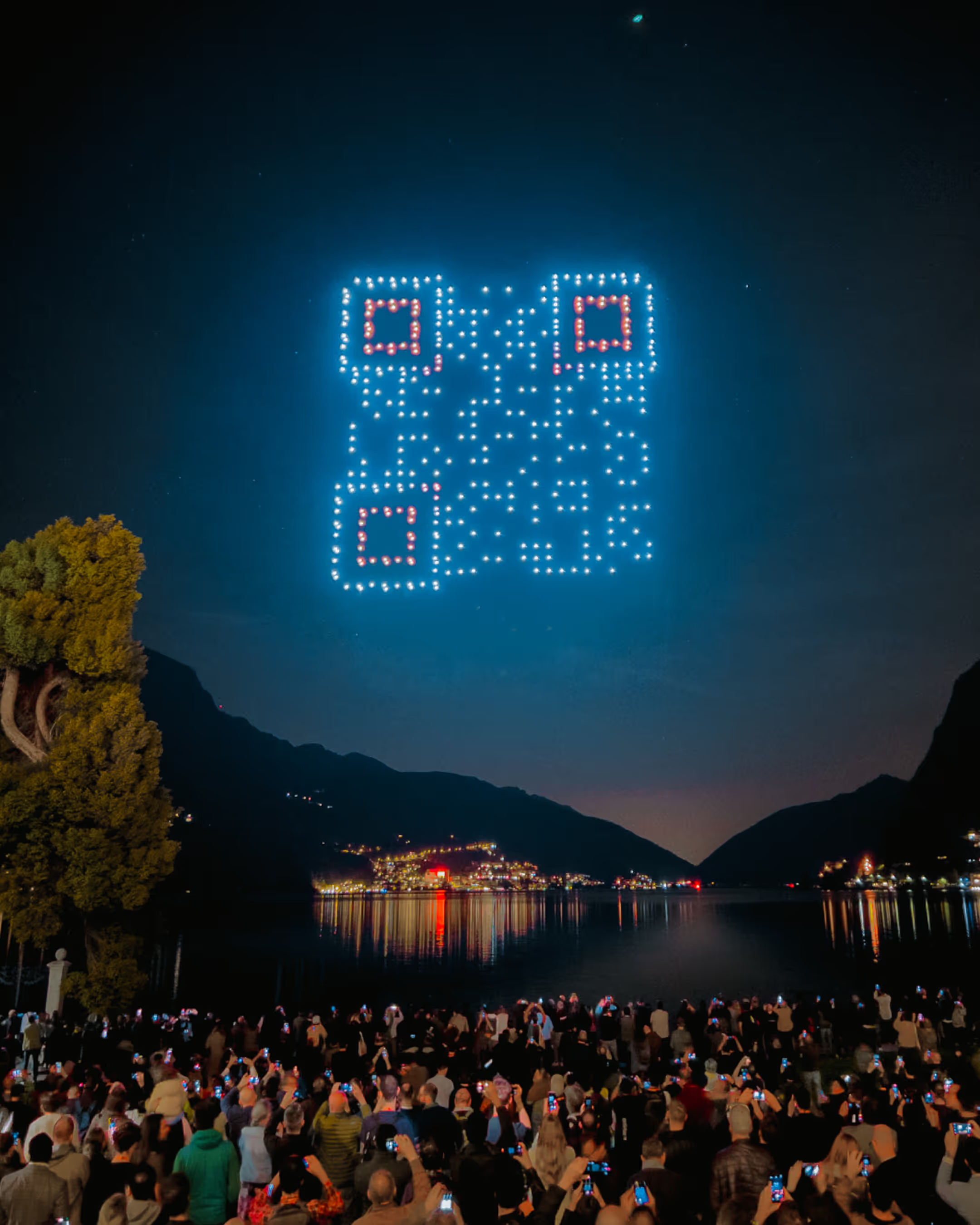
In Shanghai, Bilibili used 1,500 drones to complete a character parade with a finale nobody expected: the formation clicked into a perfectly readable QR code that sent people straight to the Princess Connect! Re:Dive landing page. The move sparked a split reaction—half the internet called it ingenious, the other half muttered “cyberpunk dystopia”—and that very tension powered shares. For the brand, the payoff was simple and rare: a single physical moment that produced both direct downloads and days of organic, handheld video circulation.
Las Vegas offered a different lesson in “one canvas.” For the Rebel Moon launch, Netflix encircled the Las Vegas Sphere with 400 drones while the Exosphere carried the show’s world on its LED skin; ground and sky read like one giant trailer. Because the image was new (and frankly hard to ignore on that skyline), it traveled fast across press and social, giving the premiere a landmark-scale hook without needing a stadium audience on site. In practice, the drones functioned as an amplifier for a façade that was already a media event.
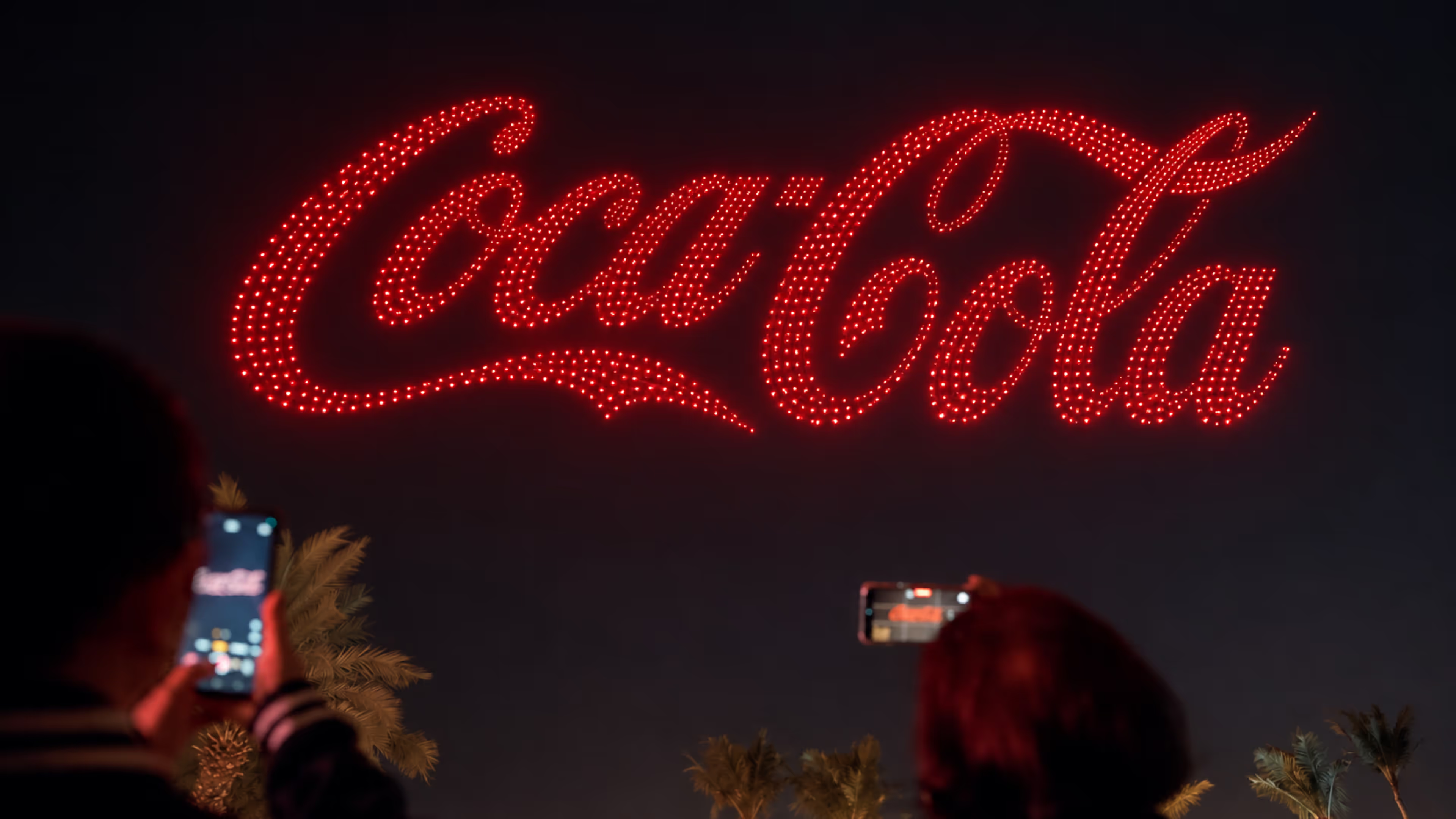
Coca-Cola leaned into seasonality twice. In New York (2024), a holiday show over the Hudson tied the Caravan tour stop at the Intrepid Museum into a single skyline moment, easy to film from piers and rooftops; it worked as a festive campaign finale that gathered people at a known place and time and pushed out a wave of UGC and local press. Weeks later, Hong Kong (CNY 2025) showed what cultural fluency looks like: 600 drones, 12 scenes, and live narration by Louis Cheung over Victoria Harbour, so the piece felt like a public ritual rather than a logo drop. In both cases, the sky sequence stitched scattered on-ground activations into one shareable capstone.
Studios learned to think in “sky billboards.” For The Flash at Santa Monica Pier, 600 drones built bold, legible iconography sized for phones and short attention spans; the live moment was brief by design, which made the clips eminently snackable. The result was the textbook “small event, long tail”: premiere-week awareness that kept pulsing through social feeds, with a clear handoff to trailers and ticketing. The sky carried both the poster and the CTA.
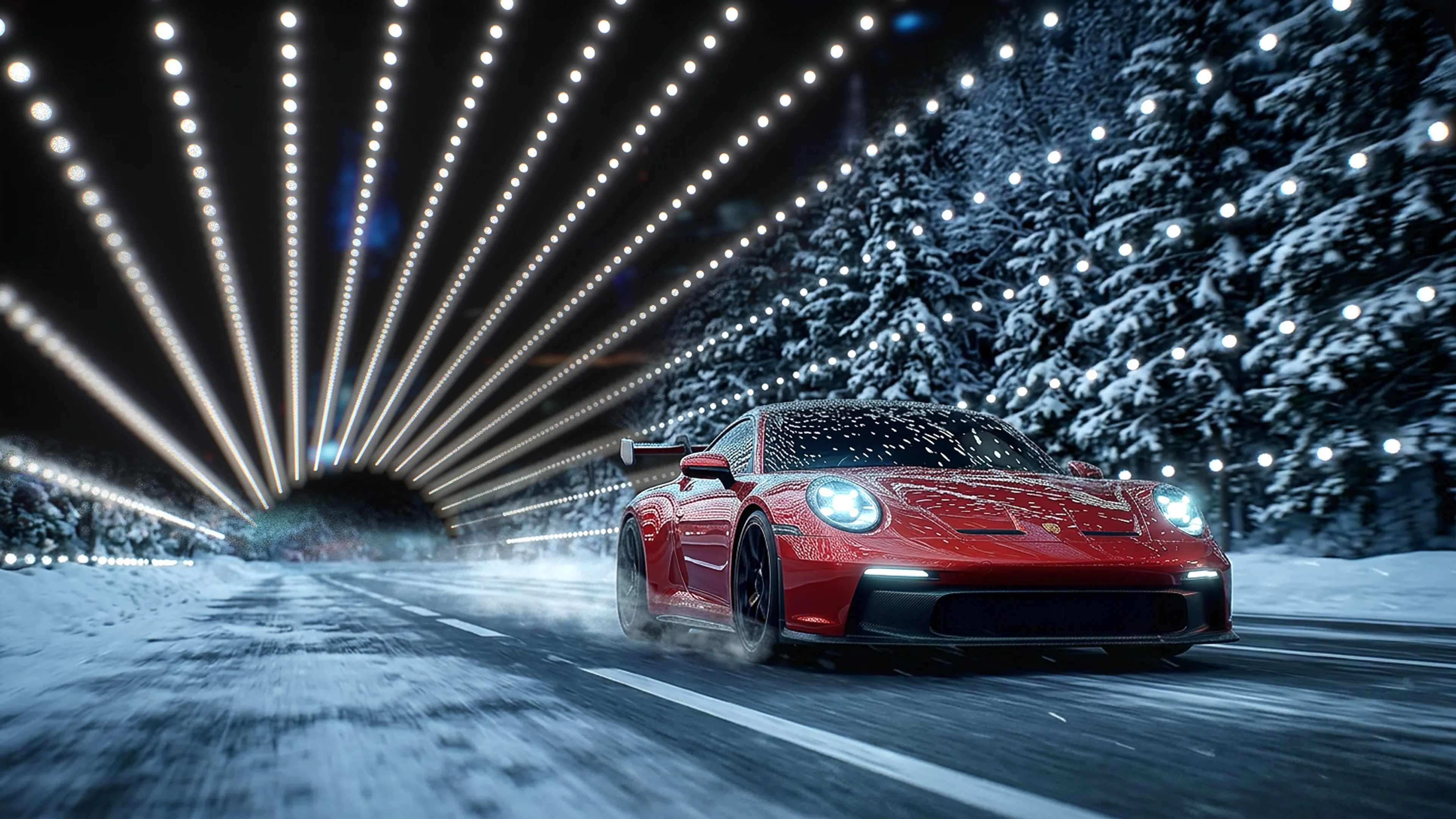
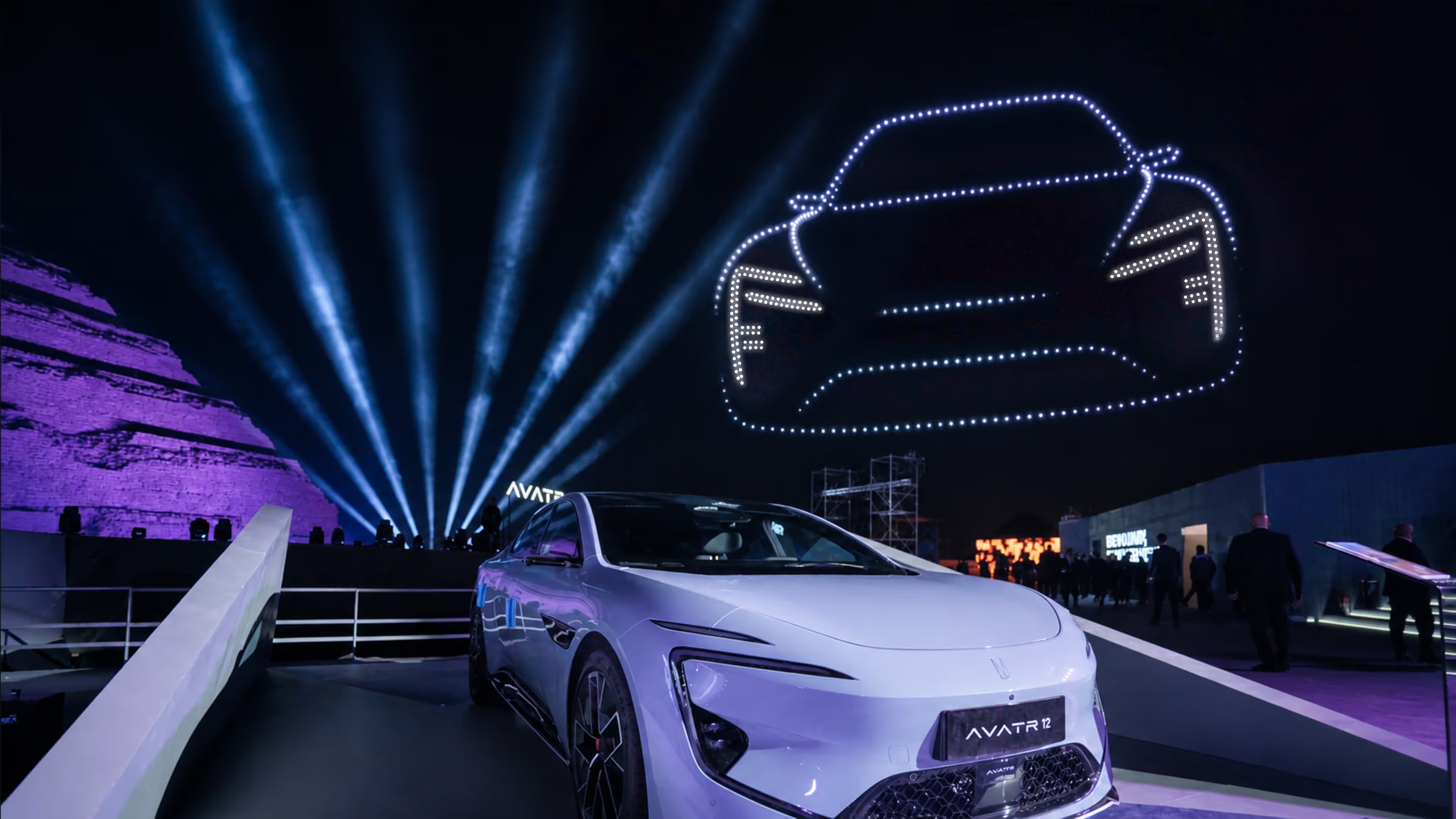
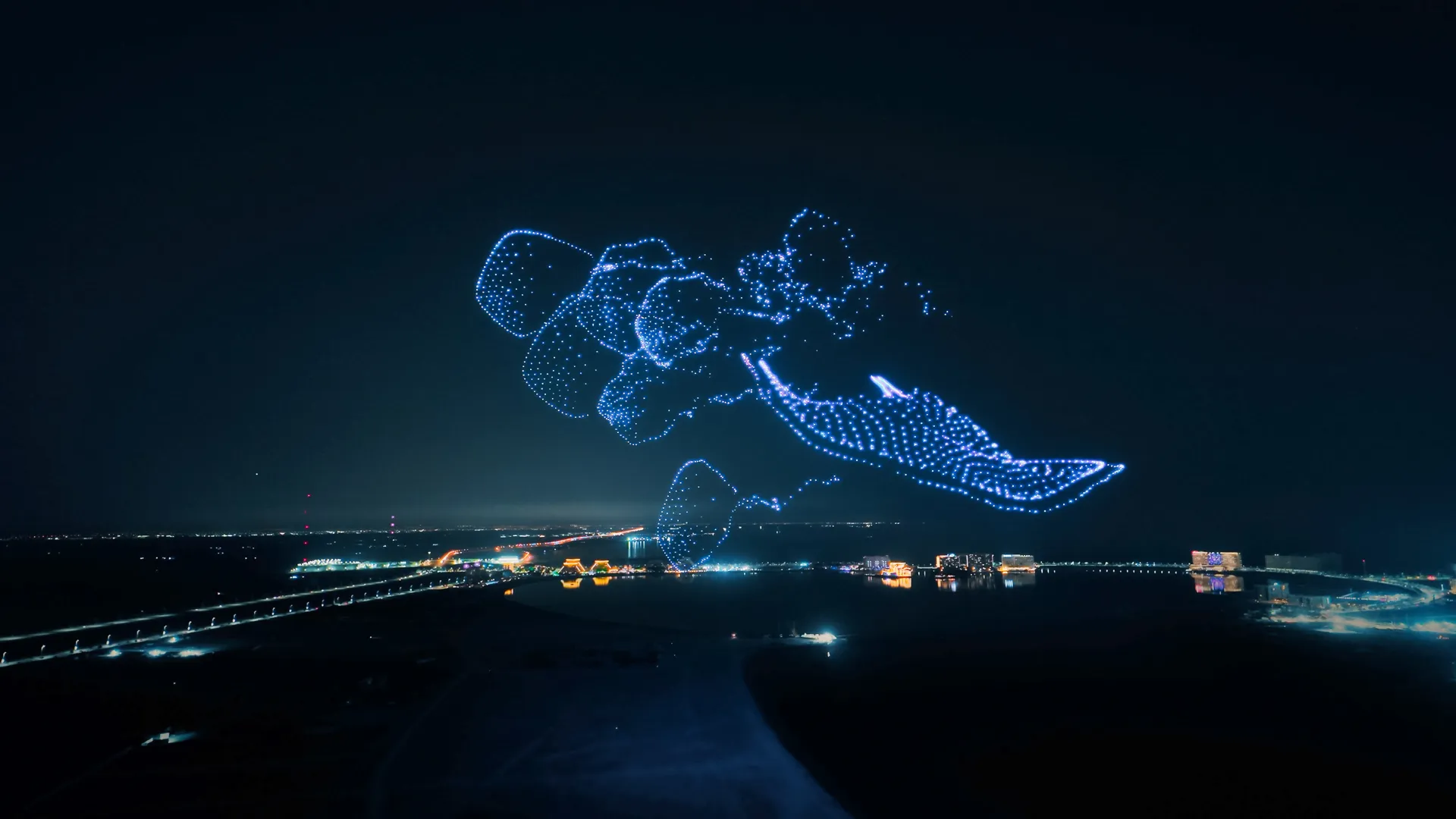
And here’s how we apply the same logic in our own work. For Jetour, we treated the reveal like motion grammar—the car “assembled” itself from points of light, resolved into a single confident line, and landed on the promise; that one beat became the hero asset for post-event edits and press. At Mira Coral Bay (Ras Al Khaimah), the medium acted as a site model: we drew the future architecture above the actual plot and used sky-level way finding to lead visitors toward the activation zone, turning curiosity into place-based understanding (and a durable sales video library). With MOTB × Dubai Shopping Festival, we treated the one-night drone show as a campaign finale—a concentrated moment designed to draw attention, generate shareable content, and leave organizers and sponsors with a reusable pool of visual assets.
Taken together, these cases show the pattern you can plan for: a live moment that feels scarce and newsworthy, a visual language written for phones, and a clean offline→online bridge so attention doesn’t evaporate—it converts.
Where drone advertising works best
Drone advertising shines when it piggybacks on existing footfall and turns a scheduled moment into something people feel compelled to film. Think of a city holiday where the waterfront is already full, a derby night with a packed stadium bowl, or a seaside promenade at golden hour: you’re not trying to build an audience from scratch—you’re layering a sky sequence onto a crowd that’s already primed. The same logic holds for product launches: an auto reveal outside a showroom, a tech drop on a campus plaza, even a real-estate unveiling on the actual plot where the building will rise. In tourism, drones turn a familiar postcard into a fresh season opener—“come now” framed by landmarks everyone recognizes. Inside retail districts and malls, short, predictable sky moments act like traffic pulses that nudge shoppers to gather, record, and share. Conferences and festivals use them as opening or closing chapters, a way to let the event speak beyond the venue.
The pattern is consistent: when a brand needs visibility plus novelty that naturally produces UGC, the sky outperforms most placements. A ninety-second scene at dusk reads as scarce (one time, one place), which is why phones come out; it’s also inherently easy to caption and repost, which is why the clip travels. That combination—crowd already present, something they haven’t seen, something they want to show—is why more brands are experimenting with small, surgical inserts rather than stand-alone spectacles. Done right, a drone placement doesn’t compete with your program; it binds it together, gives everyone a time and direction to look, and leaves you with a library of short, vertical assets that keep working after the night is over.
KPI and how to measure what the sky really delivered
A drone placement pays for itself only if you can prove two things: that people gathered and cared in the moment, and that their attention turned into action right after. The measurement plan starts on the ground. Count how many people actually came to the viewing zone and how long they stayed there; that dwell time is the truest proxy for interest. If the site allows, use heatmaps from fixed cameras or privacy-safe counters at chokepoints to see how the crowd thickens as the start time approaches and how quickly it disperses when the show ends. Pair that with a few, short intercept surveys—two questions are enough—to check brand recall and message lift while the emotion is still fresh. These on-site reads tell you whether the sky moment landed.
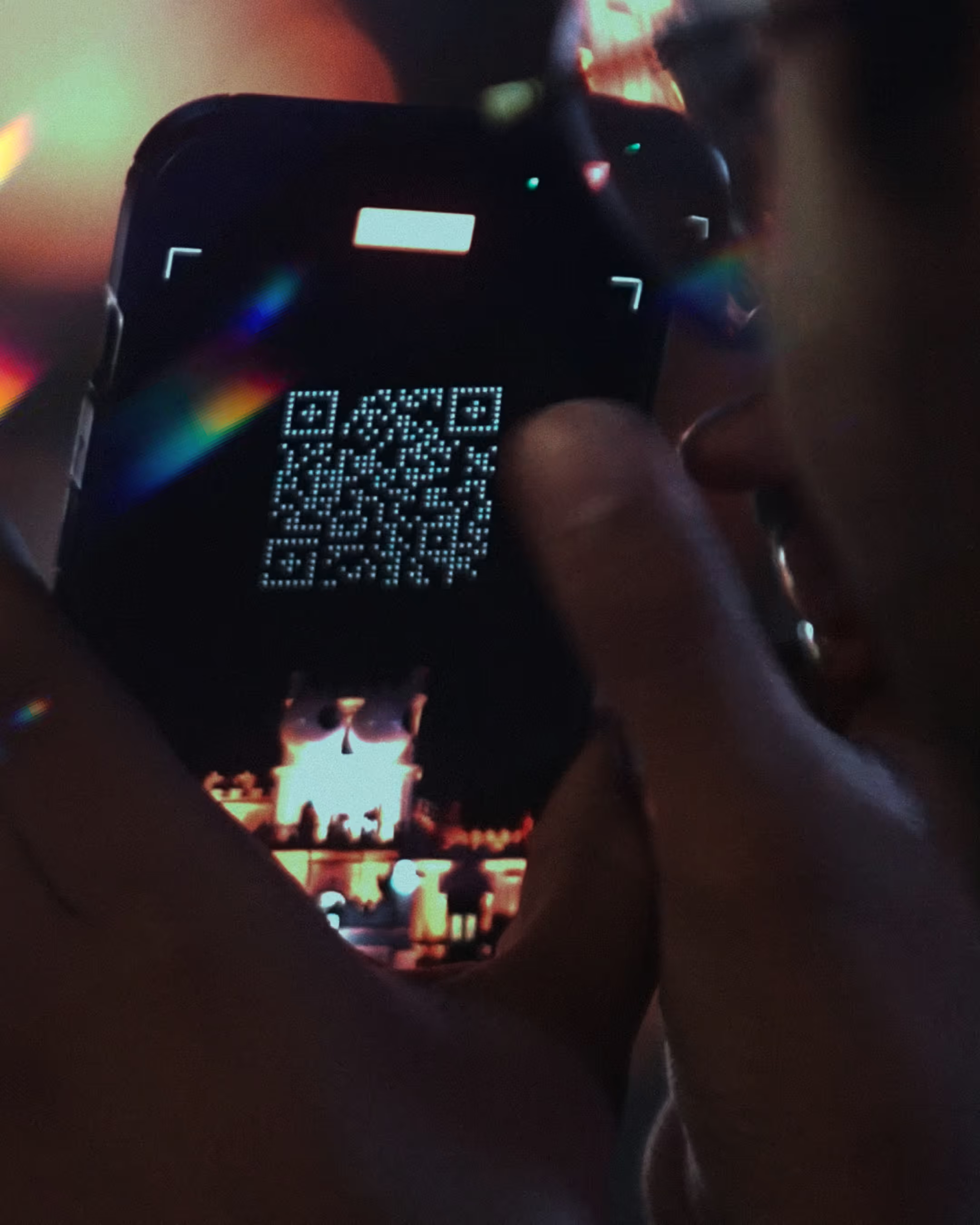
The second layer lives online, and it only works if you design for it. A scannable call-to-action—most often a QR code—should appear long enough to be comfortably captured, and it should resolve to a micro-landing that loads instantly and speaks in the same visual language as the show. That page is where you plant UTMs and pixels, where you can offer a coupon, a preorder, a test-drive slot, or an AR filter. Because it’s a single, campaign-specific URL, every scan, click, and conversion ties back to the moment in the sky rather than getting lost in your general site traffic. Social is the amplifier: monitor how many unique people post from the event window, not just total views. Track short-form views and engagement rate on UGC, and look at how quickly clips propagate outside your local bubble—when strangers are captioning your moment, you’ve crossed from attendance to culture.
Public relations is the third leg of the stool. Here, earned media value is only half the picture; tone matters. A crisp recap press note, stills, and a rights-cleared B-roll reel sent the same night help editors cover you while the city is still talking. Sentiment analysis across headlines and comments will tell you if you delivered delight or tripped into controversy; both generate reach, but only one strengthens the brand.
Quietly, there’s a fourth metric set running in the background: safety and operational quality. Formation accuracy, timing precision, wind handling, clean takeoff and landing cycles, and—most importantly—an incident-free operation are the invisible KPIs that make the visible ones possible. They won’t headline a case study, but they determine whether you’ll be invited back to that skyline again.
One nuance is worth stating outright because it explains why drone advertising works as more than spectacle. A QR code in the sky is a literal bridge from offline to online. Shanghai’s scannable finale made the point for everyone: a single, finite moment can jump people straight into your funnel. To make that bridge sturdy, treat the QR like any critical scene—give it contrast, hold it for long enough to scan without rushing, and backstop it with a short, memorable URL or VO prompt so people have two chances to take action. When you do, your nightly curve looks the way it should: a swell of bodies and phones before the show, a spike of scans and clicks during the call-to-action, and an hour-long afterglow of posts and reshares that keep feeding the funnel after the drones are back in their cases.
How to actually advertise with drones
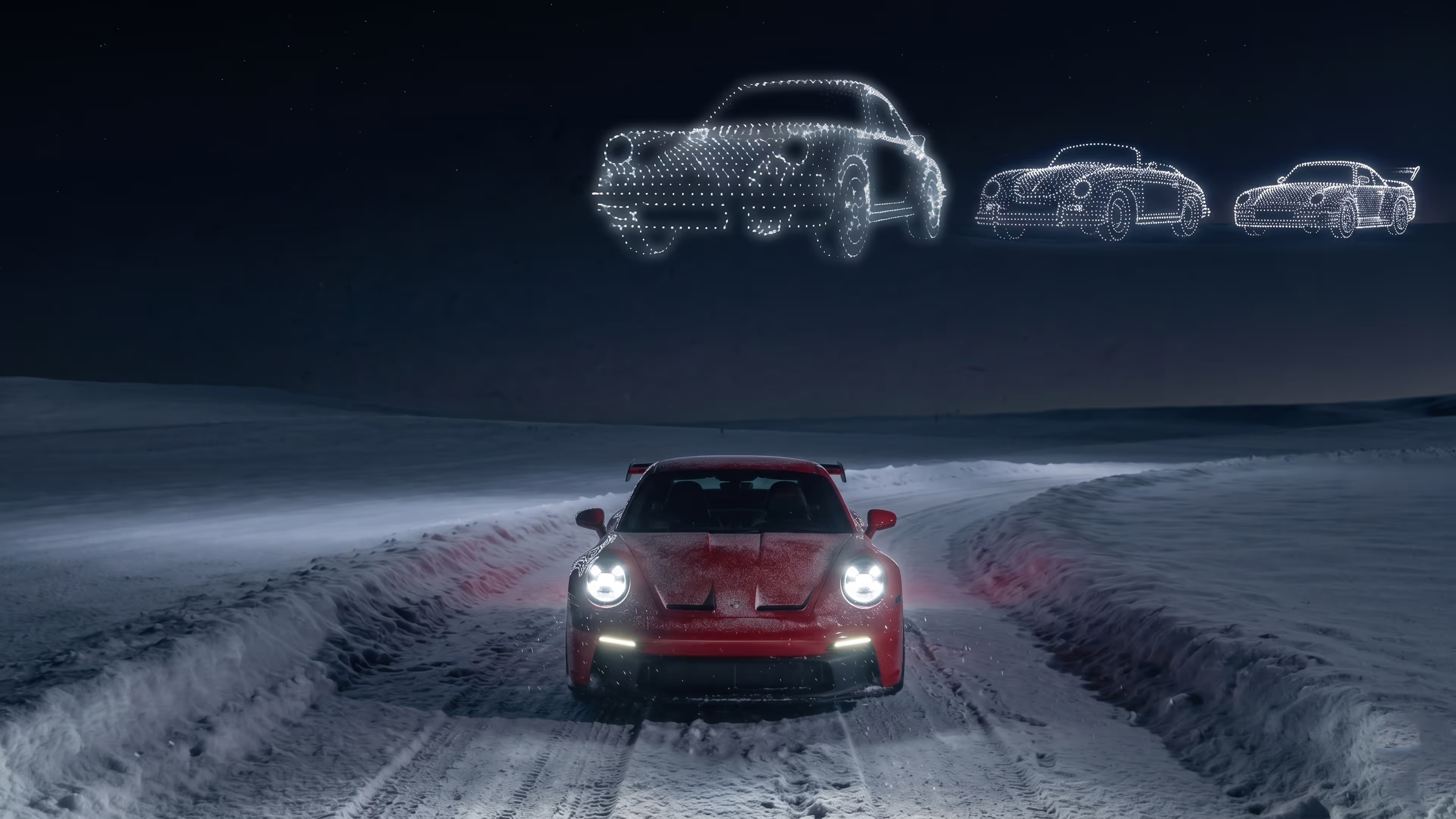
Think of the sky as a stage where each beat has a job. The cleanest use case is a product reveal written like a three-act sentence: first, a contour that assembles from points of light; then a brief 2D/3D turn that spotlights one defining feature; finally, a resolve into a short line of copy or a scannable cue. If it’s an auto launch, the chassis can “ghost in,” headlights blink, and the scene lands on a promise; for a device, the silhouette can open to reveal the hero function before collapsing into a CTA. The trick is to write for phones: big shapes, short words, and holds long enough that a stranger can film, read, and post without missing the moment.
When you want buildup rather than a single hit, use a countdown teaser arc. Across several evenings, run a 45–60-second fragment at the same time: a numeric countdown, a fragment of the logo, a color motif. Each night adds a piece; the final night resolves with the full reveal and the action you actually want—scan, book, visit, buy. Teasers work best when the location is predictable (waterfront, plaza, stadium precinct) and the camera angles are obvious, so your audience learns where to stand and what to expect.
Wayfinding can be literal. A sky pointer—an arrow that appears above street height and “walks” the eye toward your pop-up, showroom, entrance, or sales suite—turns curiosity into footfall. Pair it with a short word (“THIS WAY”) or an icon and, if the venue allows, a matching ground projection so the path makes sense both from afar and up close. In real estate, push that idea further into a site visualization: draw a luminous wireframe of the future building directly above the plot, phase through two or three “life moments” (lobby, pool, view line), and close by pointing down to the discovery zone. You’re not just decorating the sky; you’re answering the most practical question—what goes here, and why should I care?
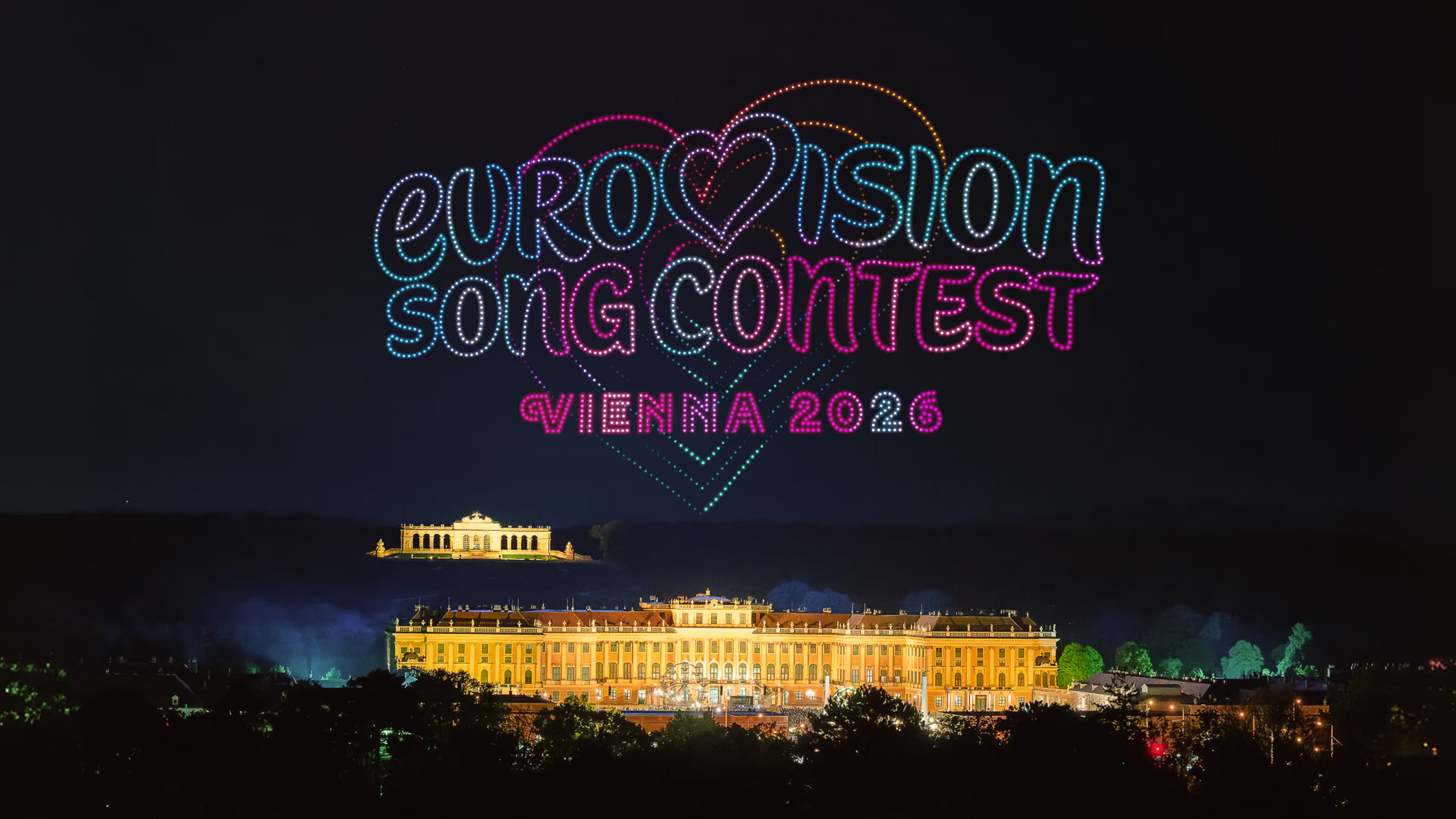
For campaigns that need reach at speed, a living billboard is the most efficient grammar. Think logo → slogan → simple transformation (logo morphs into product outline or city symbol) → scannable action. Keep vocabulary tight and legible; shorter words read cleaner than long taglines, and one strong verb beats cleverness that needs a second look. If you want something with more heart, write a micro-story: four to six frames that stitch a local icon (harbour, skyline, team crest) to your product promise and close on a single, memorable image. Stories travel because they feel like they belong to the place, not just the brand.
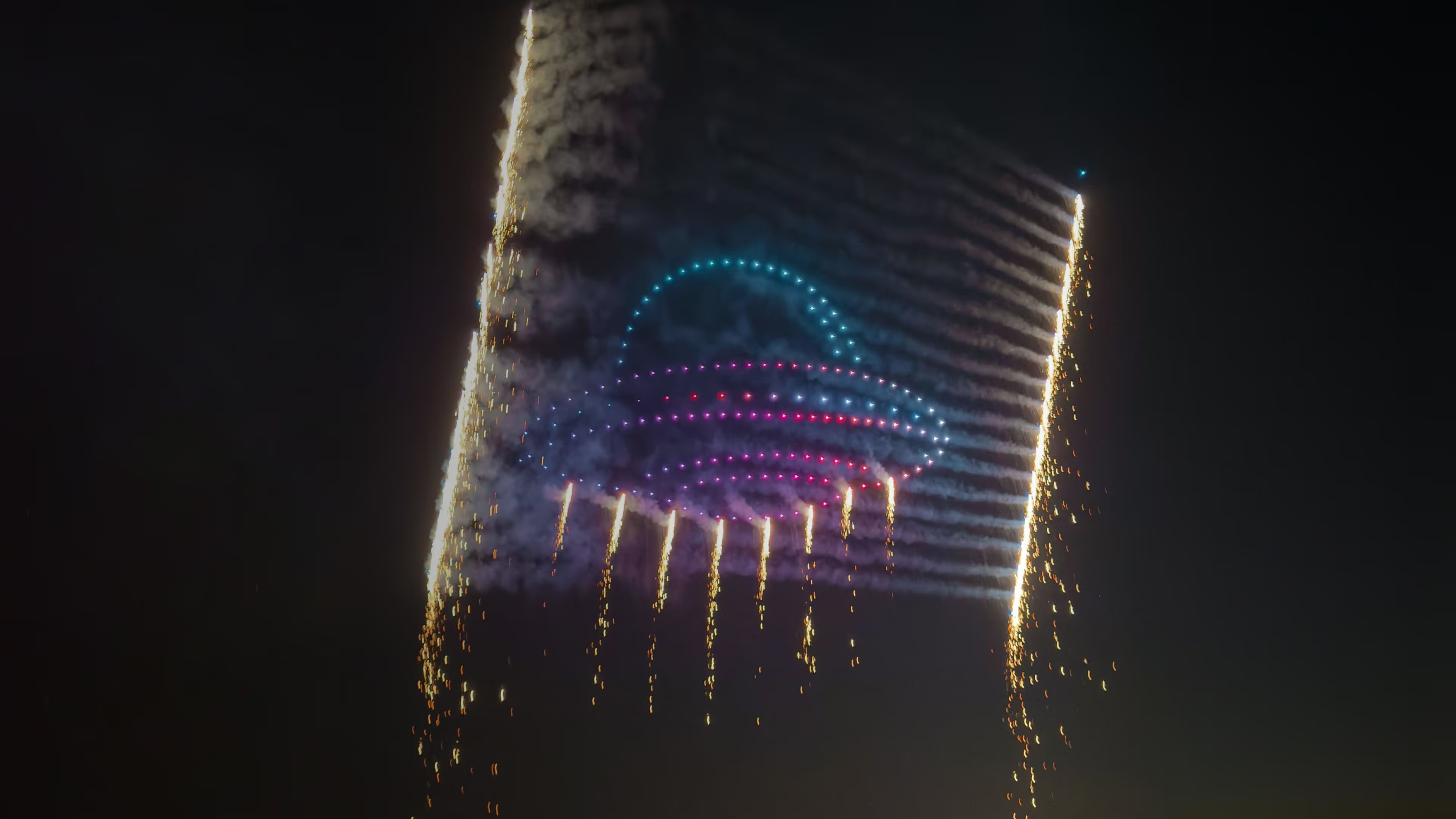
All of these ideas become ten times stronger when they live on a shared timeline. Let the soundtrack carry intent—steady pulse for countdown, swell for reveal, a moment of silence before the scan. Add voiceover to give people the exact words to post (“Scan to unlock…”, “Tonight only…”). Use lasers to outline a figure in real time or to echo the drones on a façade; add projection to turn a building into your second panel; let pyro accents punctuate beats you want people to remember, not drown out the main idea. The ground show, the façade, and the sky should feel like one sentence spoken three different ways.
Finally, design with behavior in mind. If you want scans, give the QR a clean field and hold it long enough that nobody has to rush. If you want footfall, make the arrow moment unmissable and pair it with a clearly lit entrance. If you want shares, build at least one frame that reads perfectly in vertical video and can be captioned in six words or fewer. Creative for drones is about writing one thought people can see, film, and act on—then letting music, voice, lasers, pyro, and ground choreography lift that thought until it becomes the only thing everyone’s looking at.
Reputation & ethics
Any medium that moves into public space has to earn its welcome, and the sky is as public as it gets. The core risks are simple to name—visual clutter, noise, wildlife disturbance, and privacy—but they’re best managed upstream in concept and planning, not with disclaimers after the fact. Start by asking whether the scene belongs to the place. If the show reads as a local moment with a clear idea, it feels like a gift; if it reads like logo wallpaper, it feels like trespass. One strong image, a short arc, and a restrained use of brand marks go further than a catalogue of badges. Treat the logo as punctuation, not the sentence.
Sound and light should be tuned for context. Drones don’t deliver the sharp shock of fireworks and they don’t leave smoke or debris, but they still create presence: a hum in the air, points of light in the dark. Aim beams upward, keep brightness consistent with the environment, and choose windows that respect neighborhoods, hospitals, and dark-sky considerations. Near coasts, parks, and wetlands, involve local authorities early, schedule outside sensitive hours, set standoff distances from nesting sites, and assign a wildlife monitor during rehearsals and show time. Ethics here is mostly logistics: the right place, the right hour, and a willingness to relocate or cancel if conditions change.
Privacy is as much about perception as law. Make it explicit in comms and permits that show drones carry lights, not cameras, and that audience footage is captured from designated ground teams with signage and consent where required. “Who owns the sky?” is a fair civic question; the honest answer is that you’re borrowing it for a moment with permission and purpose. Demonstrate that by sharing the schedule in advance, offering a tight runtime, and coordinating with city channels so residents aren’t surprised.
On the environmental side, drones are reusable hardware and avoid combustion byproducts, which is why many cities consider them a cleaner alternative to fireworks. Still, footprint matters: power fleets with green energy where possible, minimize trucking, and prefer piggybacking on existing events over inventing new show nights. The less you ask of the city to carry a message, the more welcome that message feels.
The creative test is simple: is this advertising that delights? Right now, the format still surprises; it wins goodwill because it feels like a public spectacle first and a brand message second. Keep it that way. Tell a story that fits the location, hold it for ninety to one-eighty seconds, give people a clear action if you need one, and stop. Do that consistently and you avoid “sky spam,” reduce regulatory friction, and build the most valuable asset of all: a city and an audience that want you back.
Trends for 2027
The sky is becoming a unified canvas. Drone shows are increasingly designed to move in lockstep with media façades, stage systems, and architectural lighting, so a building, a plaza, and the sky read as one composition. Tight timecode keeps everything in phase—music or VO sets the intent, lasers outline forms, projection mirrors the aerial scene—and the audience experiences a single idea expressed across multiple surfaces rather than a bundle of separate effects.
Regulation is becoming more structured and site-specific. Sensitive locations such as heritage sites, waterfronts, parks, and densely populated areas may come with additional restrictions, notification requirements, or operating windows. In practical terms, that means starting the permitting process earlier, defining clear operational boundaries and geofences where required, and tailoring the creative to what a particular site and jurisdiction will actually allow. Once the operational framework for a location is established, repeat runs may become easier to plan, while generic “copy-paste” shows have less room to work across very different sites.
KPIs are getting smarter and deeper. Brands can connect scans to campaign-specific landing pages, CRM flows, and retargeting, then evaluate performance through a mix of on-site dwell, QR and UTM activity, UGC reach and engagement, and earned media.
Hybrid production techniques are advancing, especially through pyro drones and precision effects. Controlled pyro effects, lasers, projection, and synchronized façade lighting can punctuate key beats without overwhelming the core aerial idea. The creative grammar is shifting accordingly: shorter scenes, bigger shapes, cleaner type, and at least one frame designed to read clearly in vertical video. Logos become punctuation, not the sentence.
We’re also starting to see more experiments with live and data-aware formats. These can include audience triggers, live inputs with visible outcomes, or scenes that react to real-time event data at sports events, festivals, and other live experiences. Such formats are already appearing in commercial productions, although they remain relatively uncommon across the industry. The rule that keeps them elegant is simple: one decision, one reveal. Interactivity should clarify the story, not turn the sky into a UI.
Finally, operations are becoming more standardized and repeatable. Site-adapted previsualization from real vantage points, structured risk assessments, established safety procedures, repeatable show-control workflows, and increasingly mature production processes make multi-night and multi-city campaigns easier to execute with consistent creative execution. That does not make drone advertising operationally simple—permissions, weather, aviation rules, and site conditions still vary—but it does make repeatable campaigns more practical than they were a few years ago.
Put together, these shifts are moving drone advertising beyond novelty and toward a more established campaign format: a repeatable way to earn attention in public space, generate content, and connect a live moment with measurable digital activity.
Conclusion
Drone advertising works when it stops being “a show” and becomes a moment with a job. The sky gives you scarcity—one place, one time—and people reward that scarcity with attention, cameras, and word of mouth. But the real value appears the second you connect that attention to action: a scan, a visit, a booking, a story that keeps traveling after the batteries are cold. Done this way, drones don’t replace your media plan; they anchor it with the one scene everyone remembers and shares.
Everything else is craft. Choose a location that deserves a crowd, write one clear idea that reads in ninety to one-eighty seconds, and let ground and sky speak the same sentence—sound, façade, lasers, even measured pyro—on a single timeline. Respect the city and its rules, treat the logo like punctuation, and design the bridge from offline to online as carefully as the reveal itself. Measure what matters (dwell, scans, UTM curves, UGC, sentiment), then let those numbers inform the next run.
If there’s a theme across the best work, it’s this: story first, safety always, and a clean handoff to digital. Brands that follow that pattern turn skyline moments into outcomes—launches that land, places that feel alive, and campaigns that can prove what the sky actually delivered.
No items found.
/ rate this article
Oops! Something went wrong while submitting the form.